

Start here
Learn yaku,
starting with the basics.
A complete shape cannot win without a yaku. Start with common yaku and learn their conditions and han values.
Three things to remember
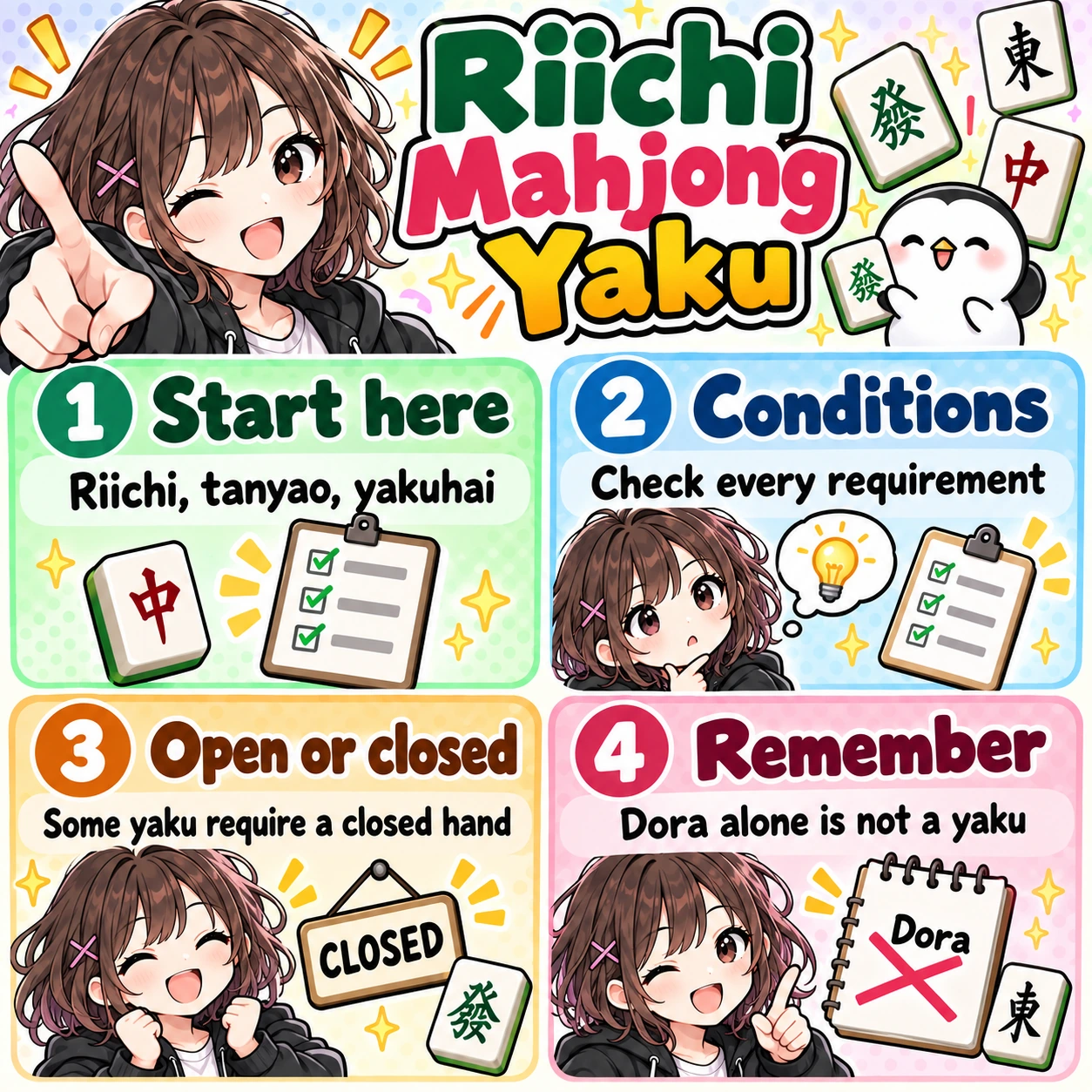
- Learn common yakuStart with riichi, tanyao and yakuhai
- Check the conditionsClosed-only yaku and the effects of calling
- Check han valuesUse the detailed reference tables below
 Enlarge the illustration ↗
1. Yaku basics and the first five to learn
| A suggested learning order | Yaku |
|---|---|
| First | Riichi, menzen tsumo, yakuhai |
| Next | Tanyao, pinfu |
| Once comfortable | Chiitoitsu, toitoi, sanshoku dōjun, ittsū, honitsu |
What is a yaku?
A yaku is a condition that qualifies a hand to win. Han is the unit used to express its value; add the han from all qualifying yaku to calculate the score. The number of yaku and the number of han differ: closed chinitsu alone is one yaku worth 6 han.
Dora are bonus tiles that add han to a hand that already has a yaku. They include regular dora, red dora and kan-dora, as well as ura-dora counted only after a riichi win. No matter how many dora you hold, you cannot win without a yaku.
Yaku can combine. Closed riichi, tanyao and pinfu give three yaku worth 3 han; two dora bring the total to 5 han.
You do not need to learn them all at once: start with five
Start with riichi, menzen tsumo, tanyao, yakuhai and pinfu. They come up often and teach the basics of building a hand.
Riichi: a fundamental yaku to learn first
With a closed hand in tenpai, declare riichi and place a 1,000-point deposit. It is worth 1 han. You cannot declare riichi with an open hand.
Menzen tsumo: complete a closed hand by self-draw
Complete a closed hand with a tile you draw yourself for 1 han. You do not need to have declared riichi.
Tanyao: no 1s, 9s or honors
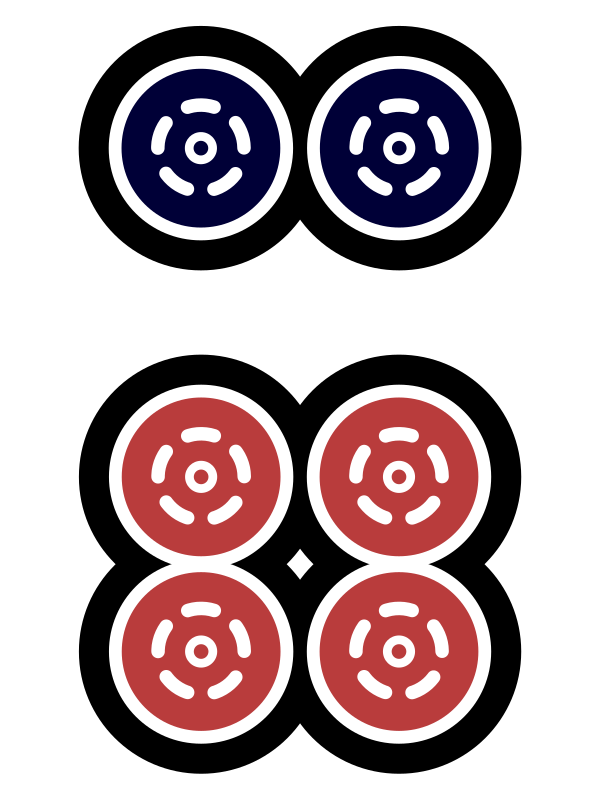
Build the hand entirely from numbered tiles 2–8 for 1 han. It can be open if the rules allow open tanyao (kuitan).
Yakuhai: collect three value honors, such as dragons
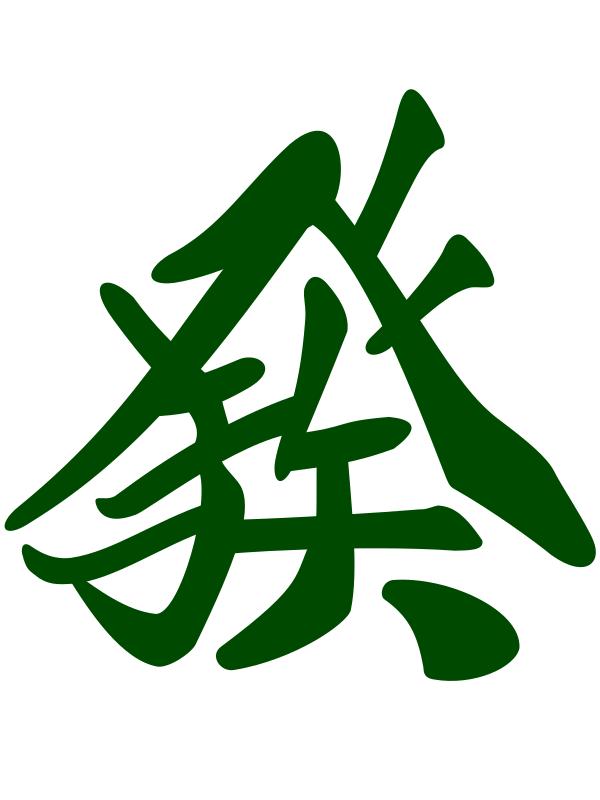
Make a triplet or quad of white, green or red dragons, the round wind or your seat wind. Calling pon is allowed.
Pinfu: a basic sequence-based yaku
A closed hand with four sequences, a non-value pair and a two-sided wait qualifies for pinfu.
Closed hands and calls: essential yaku concepts
A hand with no chii, pon or open kan using another player's discard is closed (menzen). Exposing a set made with another player's discard is fūro, commonly called opening the hand or making a call. A concealed kan using four tiles from your own hand does not break closed status.
Yaku lost when you open the hand
Riichi, menzen tsumo, pinfu, iipeikō, ryanpeikō and chiitoitsu require a closed hand.
Yaku that can be open
Tanyao, yakuhai, toitoi, sanshoku dōkō, shōsangen and honrōtō can be open. Tanyao requires a ruleset allowing open tanyao.
Yaku that lose 1 han when open
Sanshoku dōjun, ittsū, chanta, junchan, honitsu and chinitsu lose 1 han when open. This reduction is called kuisagari.
Name your yaku before calling
Check what yaku will remain after the call, such as “green-dragon yakuhai” or “ittsū for 1 han.” If you cannot name one, the completed shape may not be eligible to win.
2. Yaku listed by han value
1-han yaku: the essential starting points
One-han yaku are the most common in play. Learn both their shapes and whether they require a closed hand.
| Yaku | Closed | Open | Conditions |
|---|---|---|---|
| Riichi | 1 han | Not allowed | Declare with a 1,000-point deposit when in tenpai |
| Ippatsu | 1 han | Not allowed | Win within one uninterrupted turn cycle after riichi, with no intervening calls |
| Menzen tsumo | 1 han | Not allowed | Complete the hand with a self-drawn tile |
| Pinfu | 1 han | Not allowed | Four sequences, a non-value pair and a two-sided wait |
| Iipeikō (pure double sequence) | 1 han | Not allowed | Two identical sequences in the same suit |
| Tanyao (all simples) | 1 han | 1 han (check rules) | Use only numbered tiles from 2 to 8 |
| Yakuhai | 1 han | 1 han | A triplet or quad of dragons, the round wind or your seat wind |
| Haitei raoyue | 1 han | 1 han | Win on the final draw from the live wall |
| Hōtei raoyui | 1 han | 1 han | Win by ron on the final discard |
| Rinshan kaihō | 1 han | 1 han | Win by tsumo on a replacement tile drawn after kan |
| Chankan | 1 han | 1 han | Win by ron on a tile another player is adding to a pon |
Ippatsu accompanies riichi; it is not a standalone yaku. Even within the first turn cycle after riichi, a completed chii, pon or kan cancels ippatsu. A concealed kan also cancels it.
Yakuhai conditions can overlap. For example, an East-seat player in the East round with three East tiles has both seat-wind and round-wind yakuhai. Check the table's rules for the han value of double winds.
2-han yaku: more ways to build a hand
Two-han yaku include special shapes such as seven pairs, triplet hands such as toitoi, and sequence patterns such as sanshoku dōjun and ittsū.
| Yaku | Closed | Open | Conditions |
|---|---|---|---|
| Double riichi | 2 han | Not allowed | Declare riichi on your first discard, with no earlier chii, pon, open kan or concealed kan |
| Double wind (round and seat wind) | 2 han | 2 han | A triplet or quad of the wind matching both round and seat |
| Chiitoitsu (seven pairs) | 2 han | Not allowed | Seven distinct pairs |
| Toitoi (all triplets) | 2 han | 2 han | All four sets are triplets or quads |
| Sanankō (three concealed triplets) | 2 han | 2 han | Three concealed triplets or concealed quads |
| Sanshoku dōkō (triple triplets) | 2 han | 2 han | Triplets of the same number in characters, circles and bamboo |
| Sankantsu (three quads) | 2 han | 2 han | Three quads |
| Shōsangen (little three dragons) | 2 han | 2 han | Triplets of two dragons and a pair of the third |
| Honrōtō (all terminals and honors) | 2 han | 2 han | Use only 1s, 9s and honors, including at least one numbered tile and one honor |
| Sanshoku dōjun (mixed triple sequence) | 2 han | 1 han | The same sequence in characters, circles and bamboo |
| Ittsū (pure straight) | 2 han | 1 han | 123, 456 and 789 sequences in one suit |
| Chanta (mixed outside hand) | 2 han | 1 han | Every set and the pair contain a terminal or honor; include at least one sequence and one honor |
Sanankō depends on having three concealed triplets, not on the entire hand being closed. The fourth set can therefore be a called sequence. Conversely, ron on a double-pair wait treats the completed triplet as open, which may prevent sanankō. If completed by tsumo, that triplet is concealed.
Chanta requires every block to contain a terminal or honor, with at least one sequence and one honor. If there are no sequences and the whole hand consists of terminals and honors, check honrōtō instead. A hand with a terminal in every block and no honors is junchan.
Yaku worth 3 han or more: aiming for higher scores
There are relatively few individual yaku worth 3 han or more. Honitsu, junchan and chinitsu can be open but lose 1 han.
| Yaku | Closed | Open | Conditions |
|---|---|---|---|
| Ryanpeikō (twice pure double sequence) | 3 han | Not allowed | Two iipeikō patterns; cannot also count seven pairs |
| Honitsu (half flush) | 3 han | 2 han | Use one numbered suit and at least one honor |
| Junchan (pure outside hand) | 3 han | 2 han | No honors; every set and the pair contain a 1 or 9, with at least one sequence |
| Chinitsu (full flush) | 6 han | 5 han | Use only one numbered suit, with no honors |
Honitsu uses both one numbered suit and honors; chinitsu uses one numbered suit without honors. Both lose 1 han when open, and calls make the intended suit easier for opponents to recognize. Unlike chanta, junchan allows no honors and requires a terminal in every set and the pair.
M.League's official yaku list has no individual 4-han or 5-han yaku. A hand can still total 4 or 5 han by combining yaku and dora. WRC treats renhō as a 5-han yaku; see “Yaku that depend on the ruleset” below for details.
Yakuman: the highest-value yaku
Yakuman is the highest scoring category, handled separately from ordinary han calculations. These hands are rare, so beginners only need to recognize their names and general shapes and look up the details when relevant.
| Yakuman | Open hand | Requirements |
|---|---|---|
| Kokushi musō (thirteen orphans) | Not allowed | One of each of the 13 terminals and honors, plus a duplicate of one |
| Suuankō (four concealed triplets) | Not allowed | Four concealed triplets or concealed quads |
| Daisangen (big three dragons) | Allowed | Triplets or quads of all three dragons |
| Ryūiisō (all green) | Allowed | Use only 2, 3, 4, 6 and 8 bamboo and green dragons |
| Tsūiisō (all honors) | Allowed | Use only honor tiles |
| Shōsuushii (little four winds) | Allowed | Triplets of three winds and a pair of the fourth |
| Daisuushii (big four winds) | Allowed | Triplets or quads of all four winds |
| Chinrōtō (all terminals) | Allowed | Use only numbered 1s and 9s |
| Suukantsu (four quads) | Allowed | Four quads |
| Chuuren pōtō (nine gates) | Not allowed | 1112345678999 plus one tile, all in one numbered suit |
| Tenhō (blessing of heaven) | Not allowed | The dealer has a winning starting hand |
| Chiihō (blessing of earth) | Not allowed | A non-dealer wins on their first draw with no intervening calls |
Whether thirteen-sided kokushi, suuankō tanki, pure nine gates and big four winds count as double yakuman, whether yakuman can stack, and whether liability payments apply all depend on the rules.
Try it in MemoJong: Arrange your hand and check its yaku and score →
3. Learn completed shapes from tile diagrams
Tile examples of important beginner yaku
If a written description is hard to follow, divide the completed 14 tiles into sets. The diagrams below show typical completed hands.
A completed riichi hand
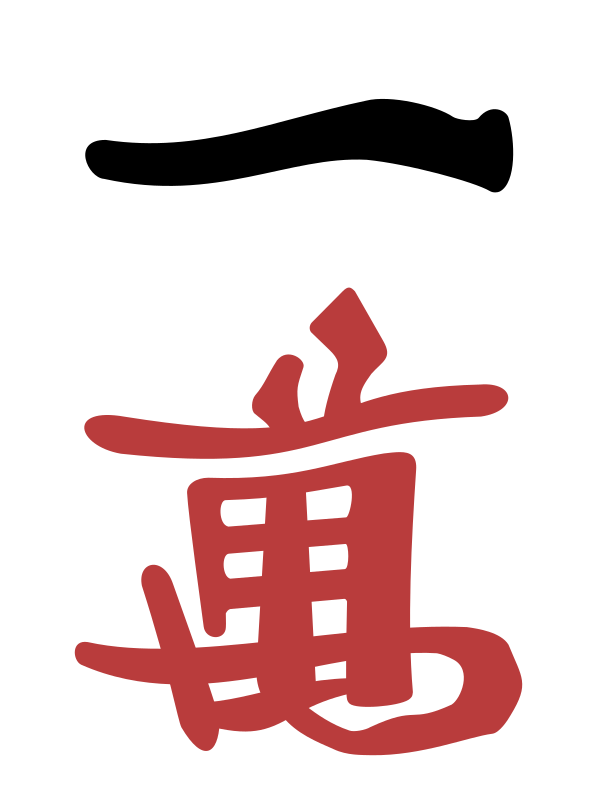
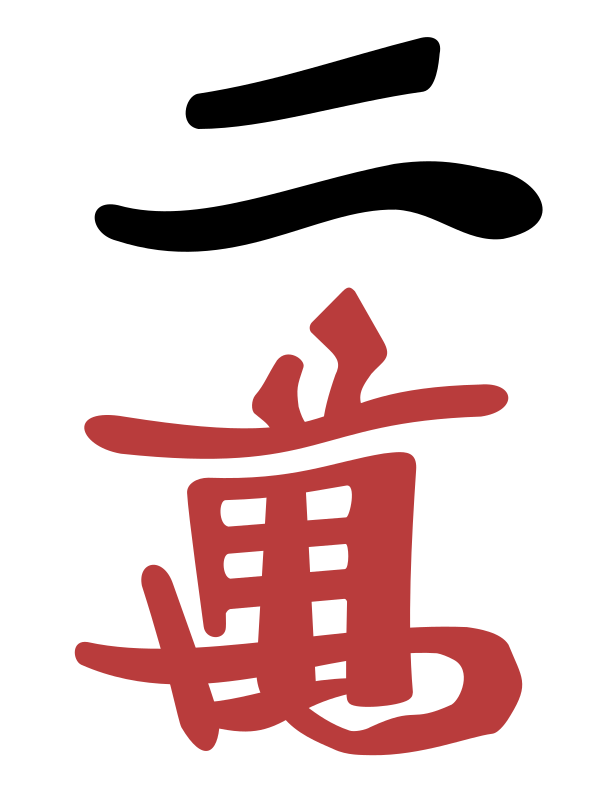
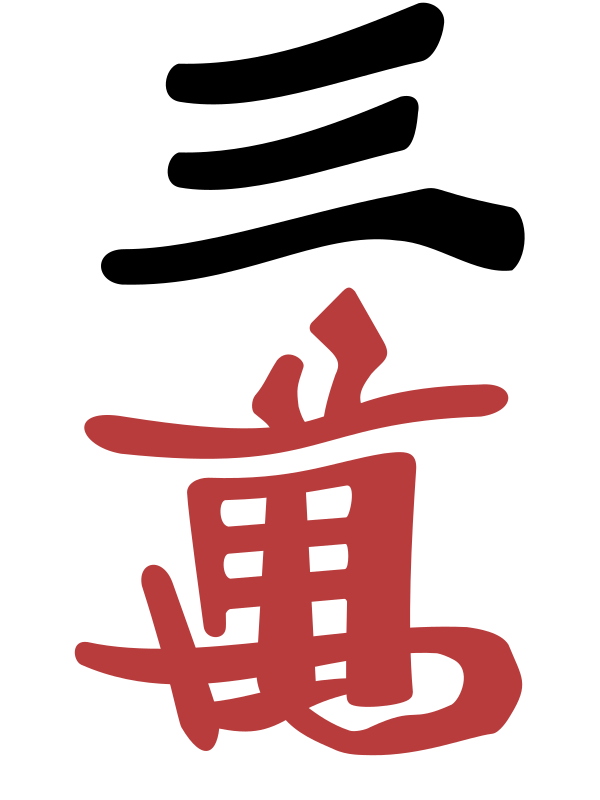
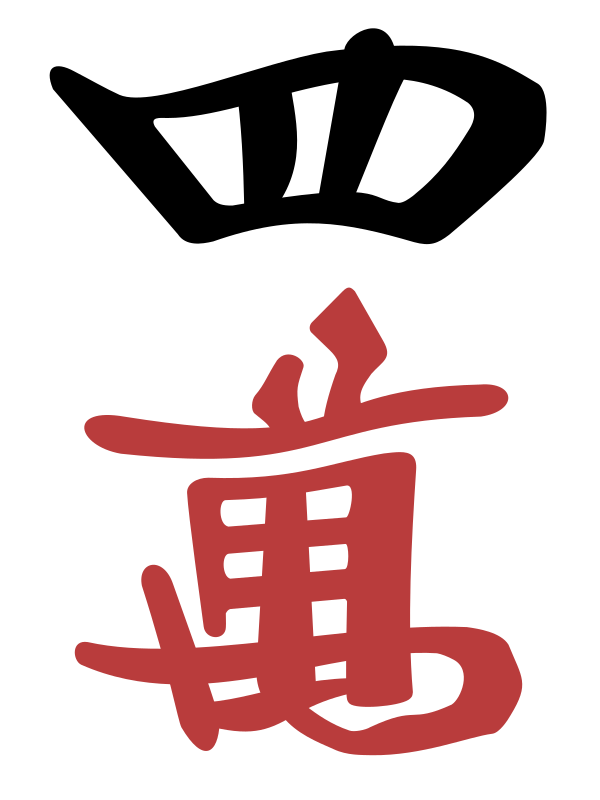
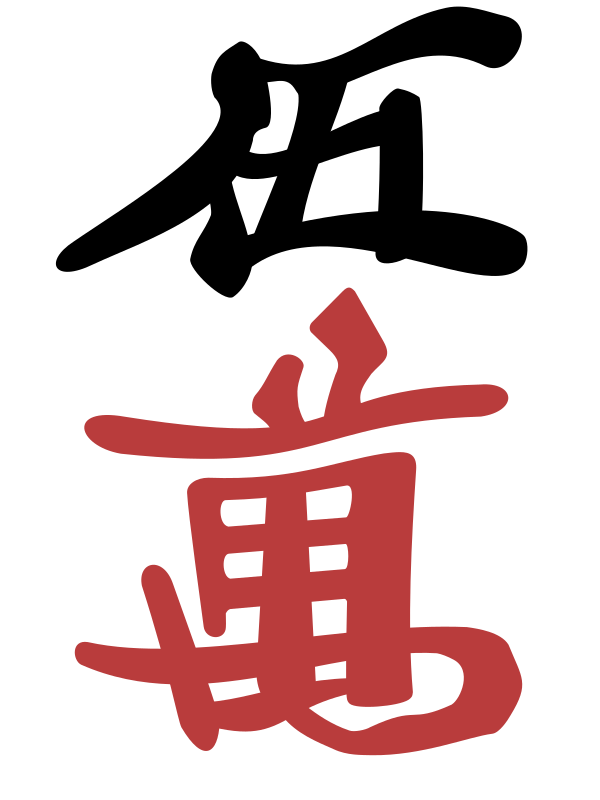
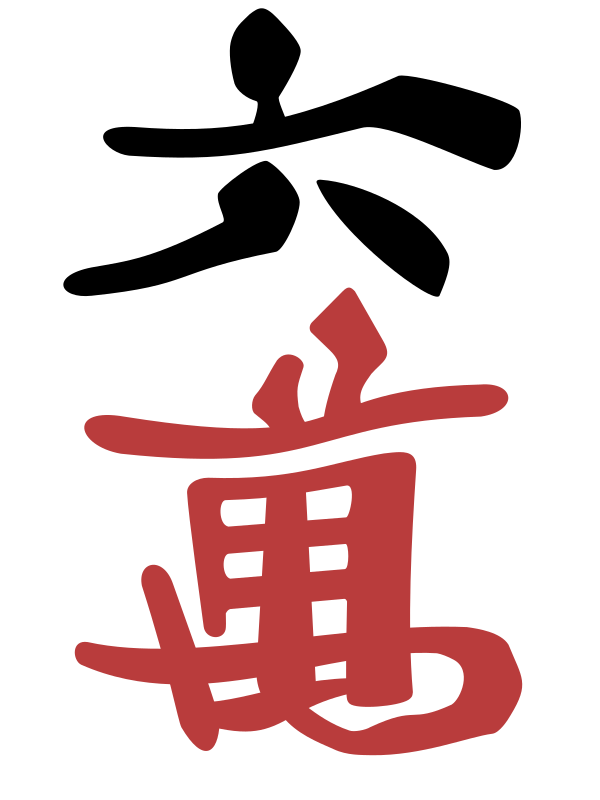

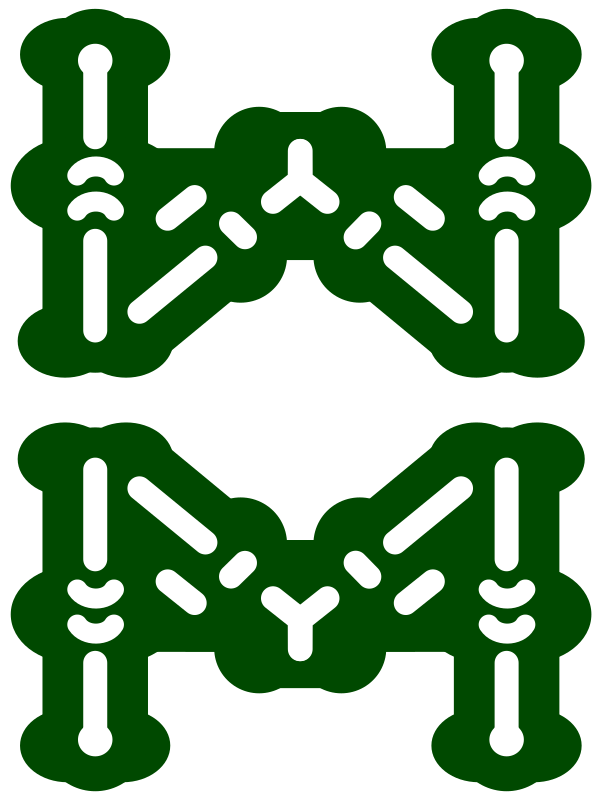
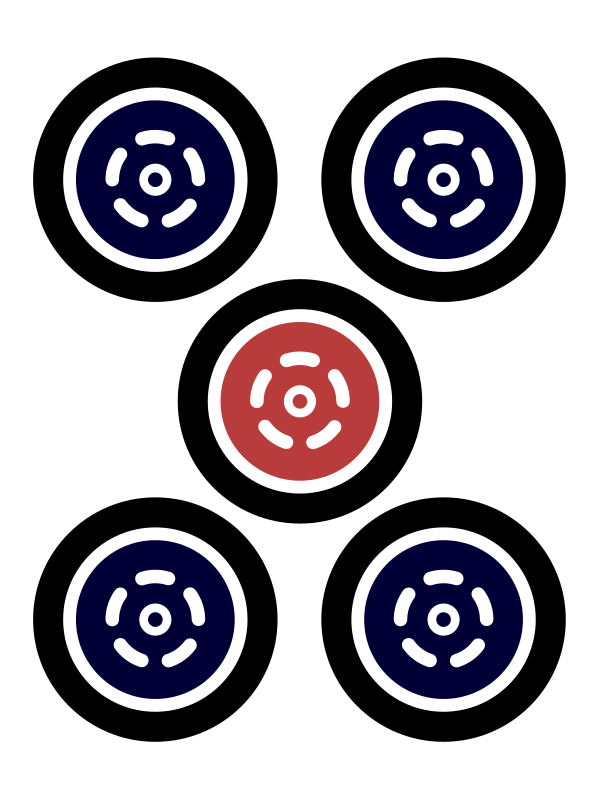
The completed hands are shown with tiles grouped into blocks. First identify the part that satisfies the yaku. The final han depends on closed or open status, ron or tsumo, round and seat winds, and dora.
A completed tanyao hand
A completed yakuhai hand
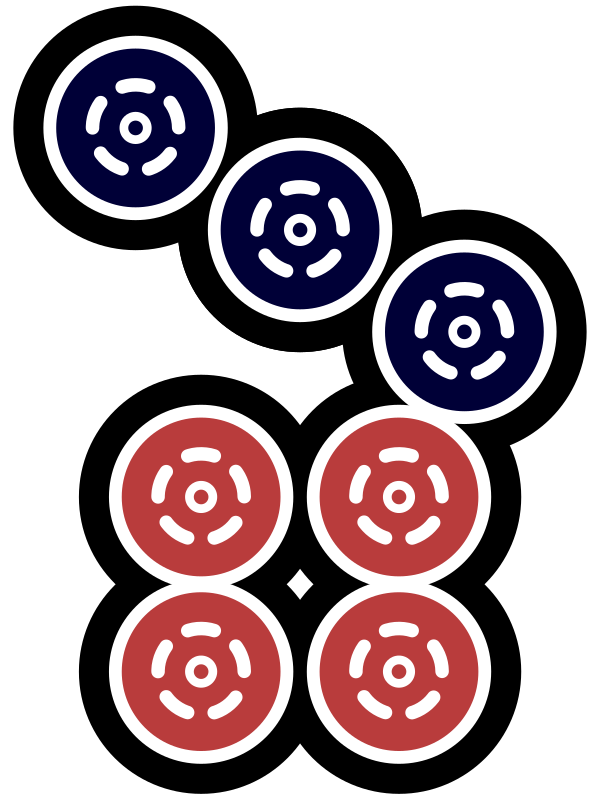
A completed pinfu hand
A completed seven-pairs hand
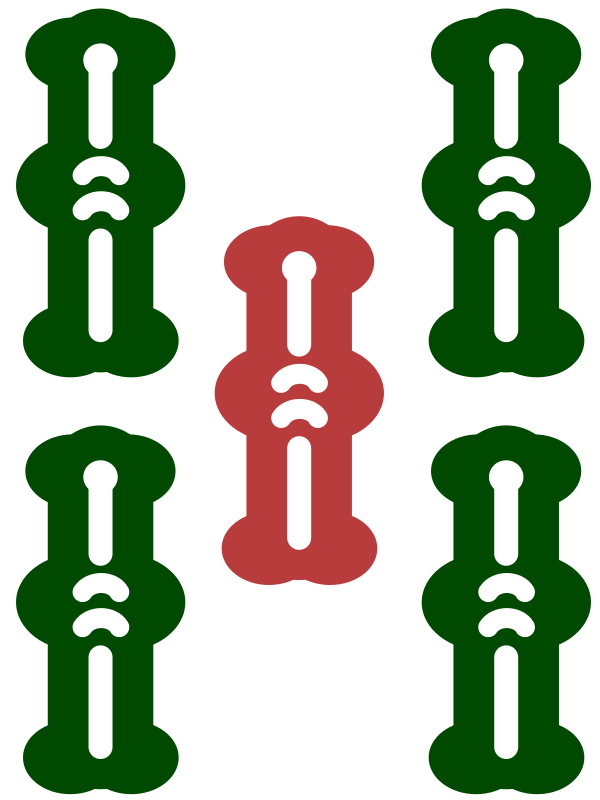
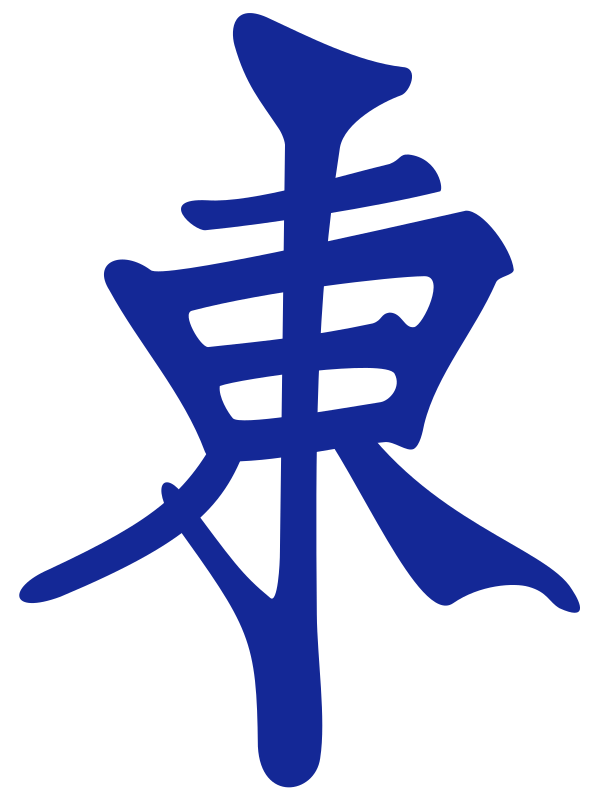
A completed toitoi hand
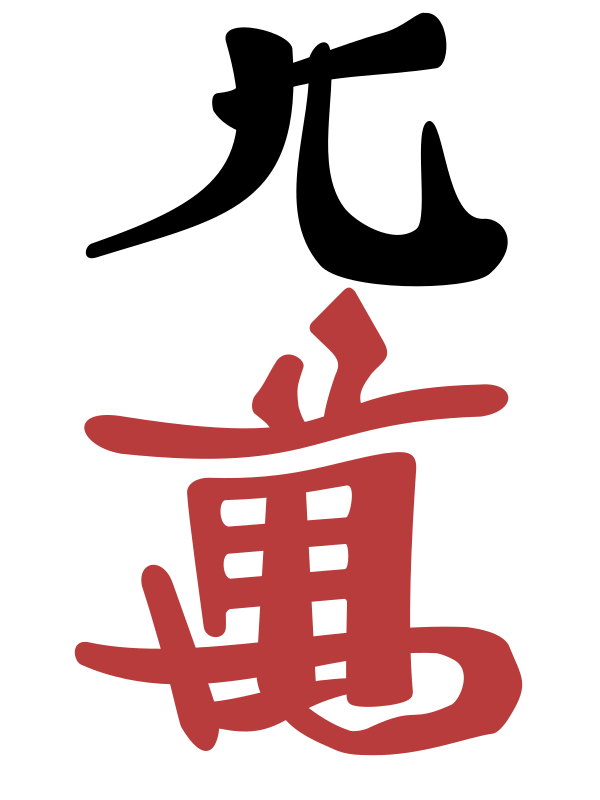
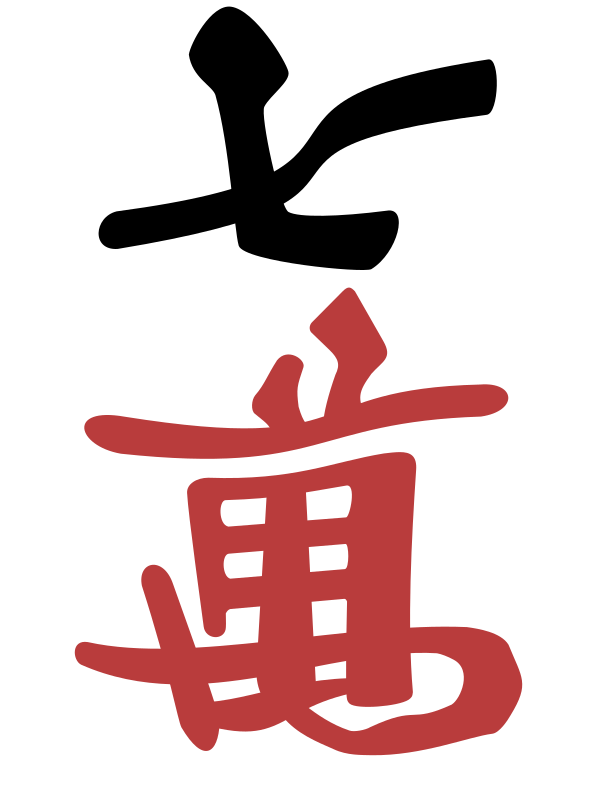
A completed sanshoku dōjun hand


A completed ittsū hand
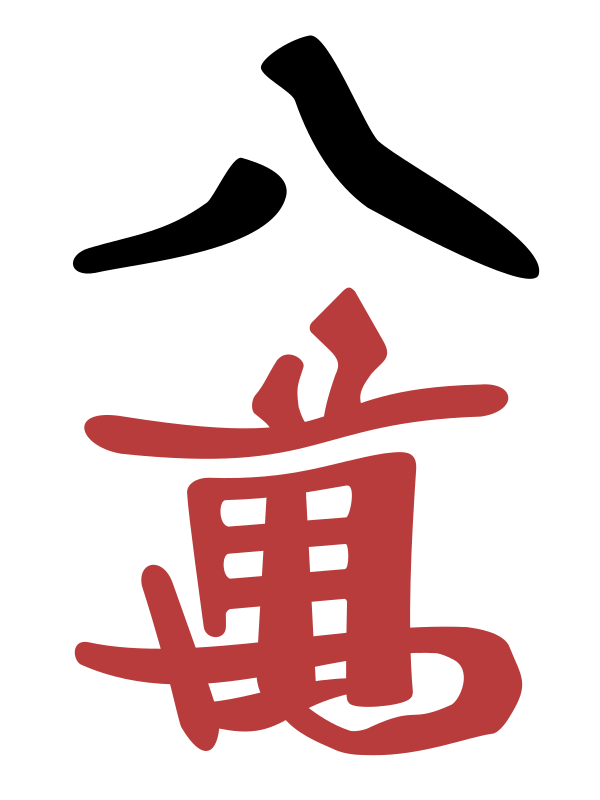
A completed honitsu hand
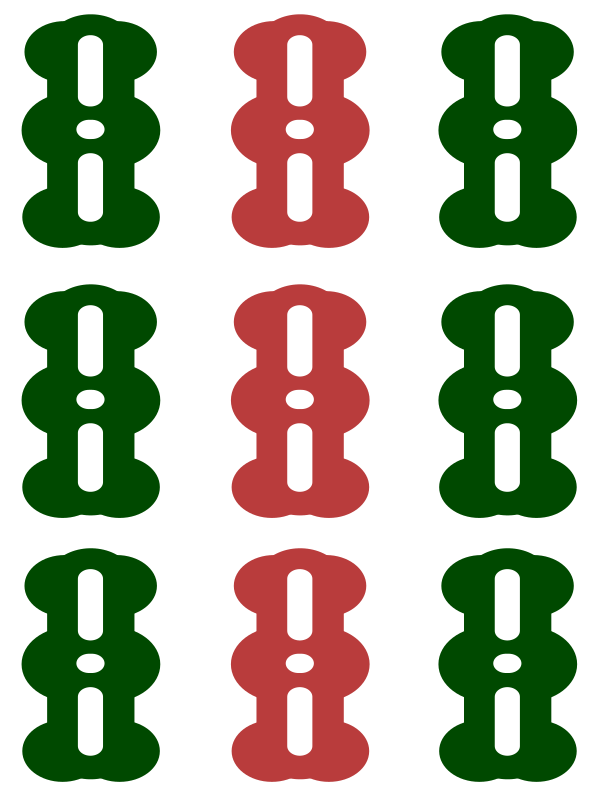
A completed chinitsu hand
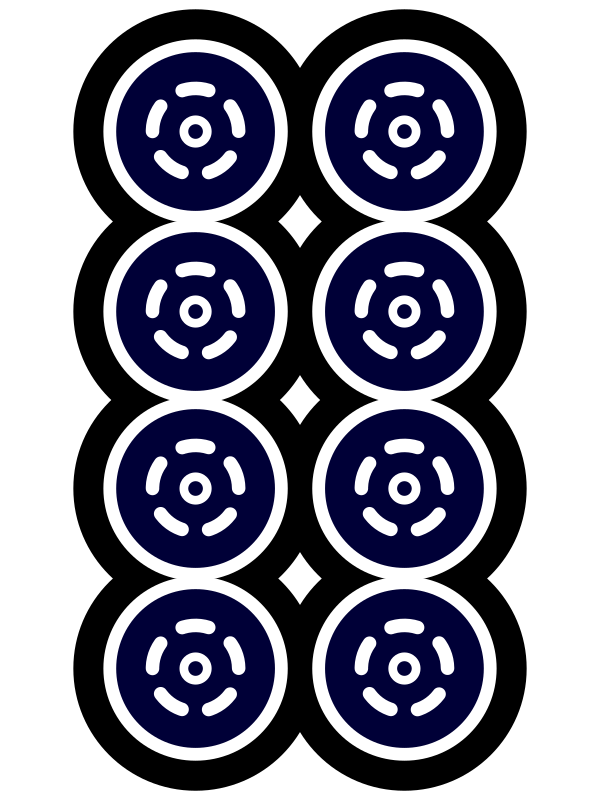
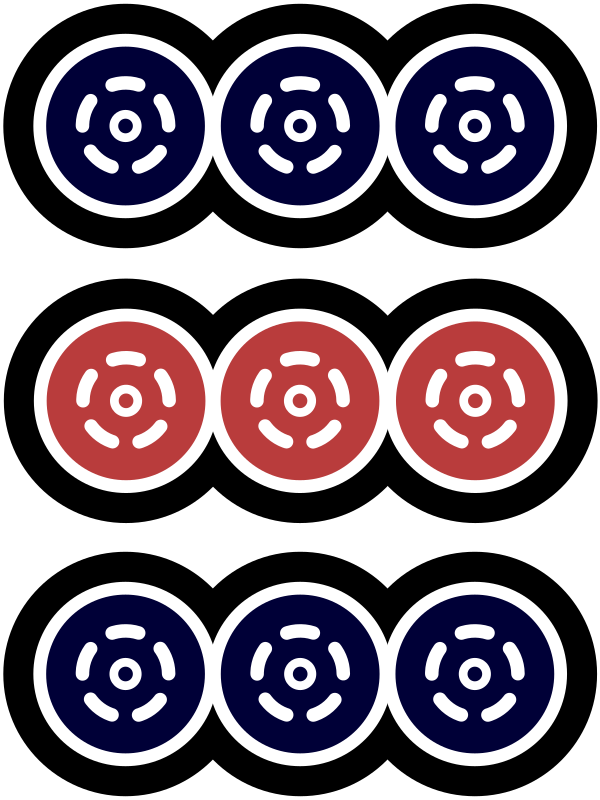
A completed kokushi musō hand
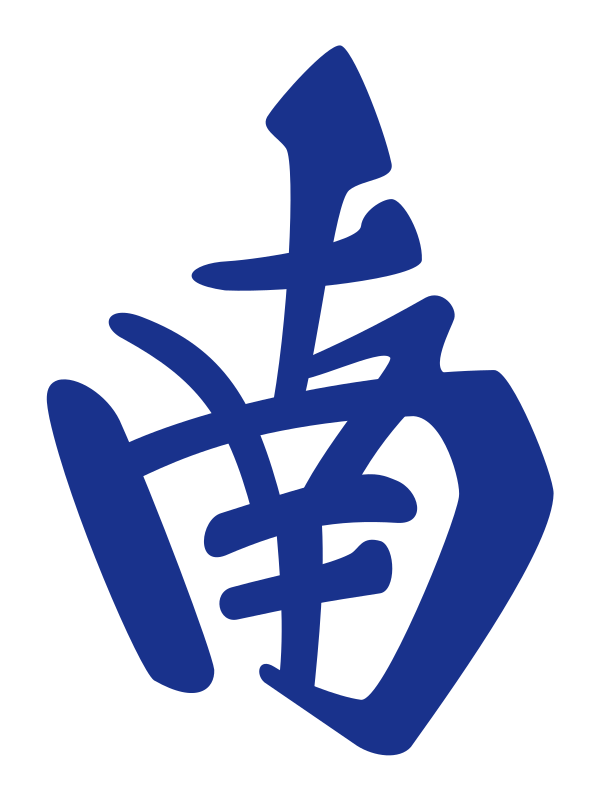

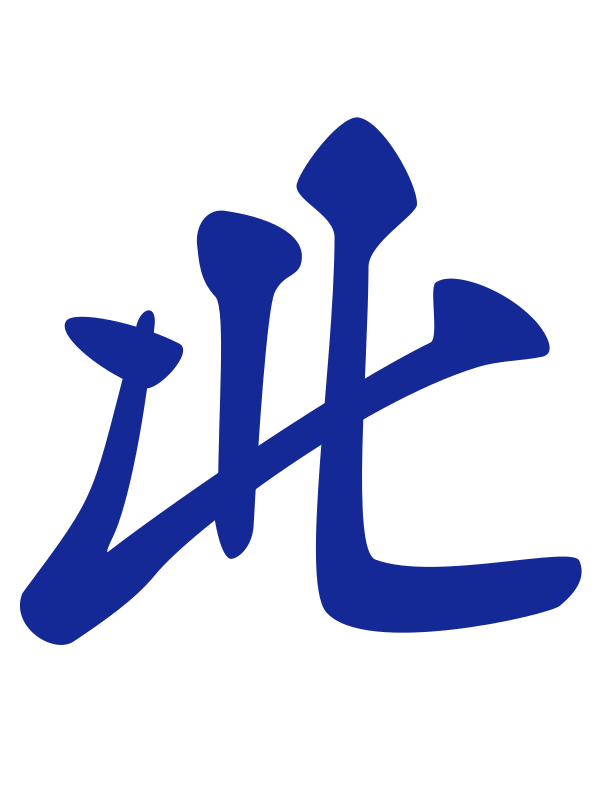

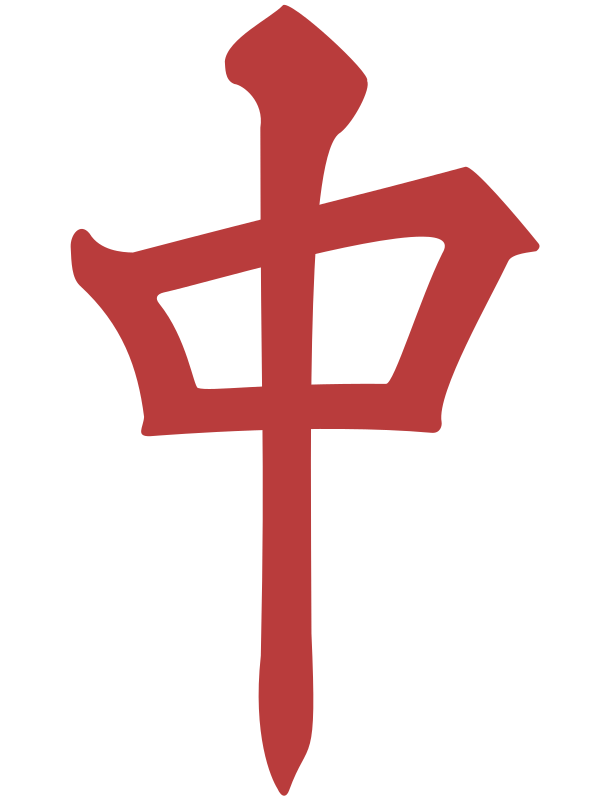
A completed daisangen hand
Learn similar yaku together
Comparing related yaku makes their conditions easier to remember.
| Comparison | Difference |
|---|---|
| Tanyao / Chanta / Junchan | Only simples / Terminal or honor in each block / Terminal in each block |
| Honitsu / Chinitsu | One suit with honors / One suit without honors |
| Toitoi / Sanankō | Four triplet sets / Three concealed triplets |
| Sanshoku dōjun / Sanshoku dōkō | Same sequence in all three suits / Same triplet in all three suits |
| Iipeikō / Ryanpeikō | One pair of identical sequences / Two pairs of identical sequences |
| Shōsangen / Daisangen | Two dragon triplets and a dragon pair / Three dragon triplets |
| Shōsuushii / Daisuushii | Three wind triplets and a wind pair / Four wind triplets |
4. Find yaku in your hand
An order for checking which yaku your hand has
- Check whether the hand is open
- Look for 1s, 9s and honors
- Count sequences and triplets
- Look for repeated numbers or a concentration in one suit
- Check for special shapes such as seven pairs or thirteen orphans
- Check round wind, seat wind and dragons
- Check ron or tsumo
- List every qualifying yaku
- Count dora last
You are less likely to miss a yaku if you narrow the possibilities from tile types and set patterns instead of trying to recall yaku names at random.
Common beginner hands with no yaku
- Trying to win just because the hand has dora
- Trying to declare riichi after chii or pon
- Opening a planned pinfu hand without retaining another yaku
- Calling East when it is neither your seat wind nor the round wind
- Keeping a 1, 9 or honor in a planned tanyao hand
- Mismatched sequence numbers for sanshoku dōjun or mixed suits for ittsū
- Using two numbered suits in a planned honitsu hand
Many no-yaku mistakes can be avoided by checking the intended yaku before calling and knowing your seat wind and the round wind.
Combining yaku can raise the score substantially
Look for conditions that qualify together, rather than considering each yaku alone. Familiar combinations let you increase value without forcing the hand.
| Combination | Han when closed |
|---|---|
| Riichi + Tanyao + Pinfu | 3 han |
| Riichi + Pinfu + Sanshoku dōjun | 4 han |
| Yakuhai + Toitoi | 3 han |
| Yakuhai + Honitsu | 4 han |
| Tanyao + Pinfu + Sanshoku dōjun | 4 han |
| Riichi + Iipeikō + Pinfu | 3 han |
Add dora to these totals at the end. Prefer naturally compatible yaku over chasing a pattern that greatly reduces useful draws.
After yaku, learn scoring
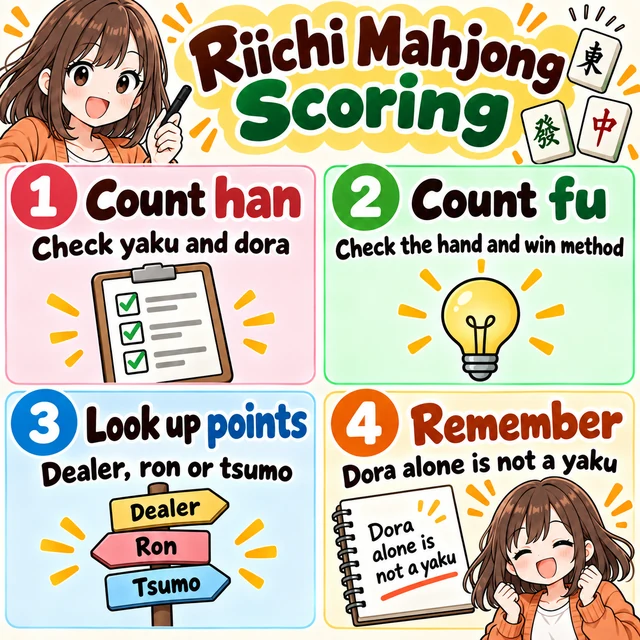
Once you know the yaku, total their han and usually combine that with fu to calculate the score. Payments also depend on dealer status and ron or tsumo. Five han is mangan, 6–7 is haneman, 8–10 is baiman and 11–12 is sanbaiman.
For the full procedure, see Mahjong scoring: han, fu, dealer status, ron and tsumo for beginners.
5. Yaku that depend on the ruleset
Do yaku differ between M.League, Mahjong Soul and Tenhou?
Basic yaku such as riichi, tanyao, yakuhai and pinfu are shared by many rulesets. Their detailed treatment is not always identical.
- Open tanyao: whether tanyao is allowed after calling
- Counted yakuman: whether 13+ han scores yakuman or is capped at sanbaiman
- Double yakuman: whether hands such as suuankō tanki or thirteen-sided kokushi score double
- Renhō: whether it is adopted and its han or point value
- Nagashi mangan: whether it is treated as a yaku or a special mangan payment
- Liability payments (pao): which yaku qualify and how payment is divided
- Double winds: how fu for the pair is counted
M.League, WRC, online games and mahjong venues have different rules, which may also be revised. Check the current rules for your service or tournament instead of assuming a common convention always applies.
What are local yaku?
Local yaku are adopted only in particular regions, venues, groups or games. Examples include renhō, daisharin, suurenkō and pārenchan, but their requirements and scores are not standardized.
Confusing local yaku with widely used ones can lead to an invalid declaration at another table. Before playing, agree on each local yaku's requirements, han or yakuman value, and whether it can be open.
References
- M.League official match rules (minimum yaku requirement, dora, scoring, yaku list and combined yakuman)
- World Riichi Championship Rules (current WRC rule documents)
- WRC Player Materials (official yaku and score tables)
Related guides
 A straightforward guide to mahjong scoringWork through yaku, han, fu and payments in order
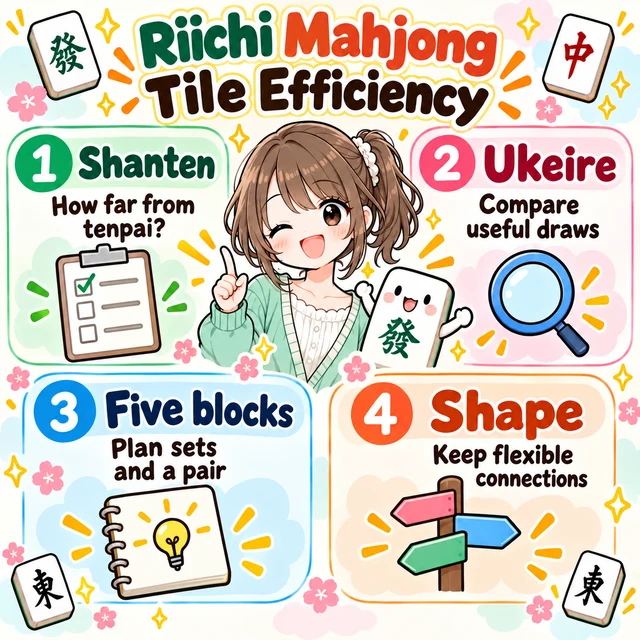 An Introduction to Tile EfficiencyLearn shanten, ukeire and the five-block method
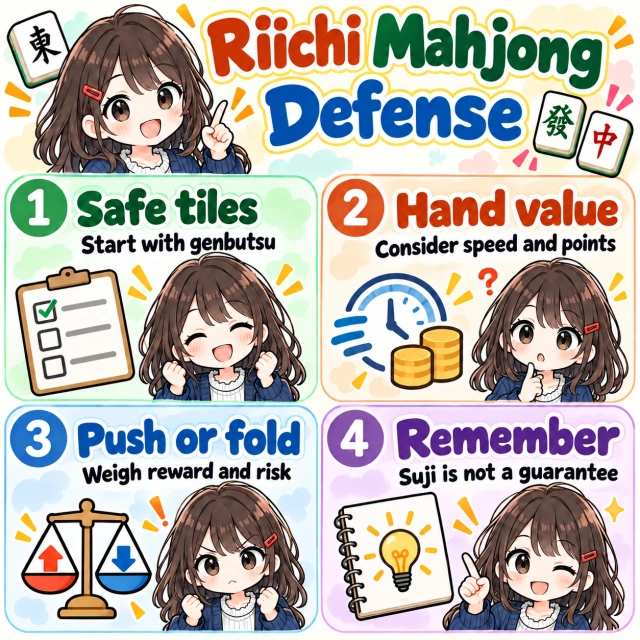 Mahjong defense and push-or-fold decisionsChoose safer discards using genbutsu, suji and kabe
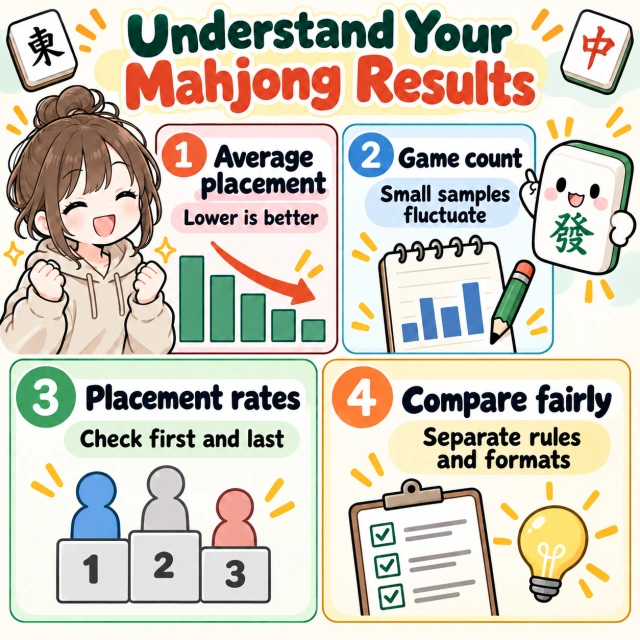 Understanding average placement in mahjongRead results alongside top and last-place rates
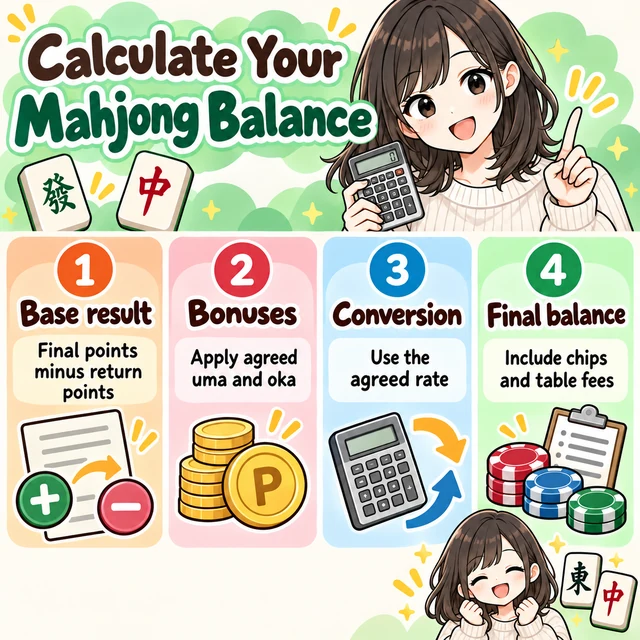 How to Calculate Mahjong Net ResultsSettlement with uma, oka and a conversion rate
 Tracking Three-Player Mahjong ResultsRule differences and records for three-player mahjong