

Start here
Your first hand starts
with the basic flow.
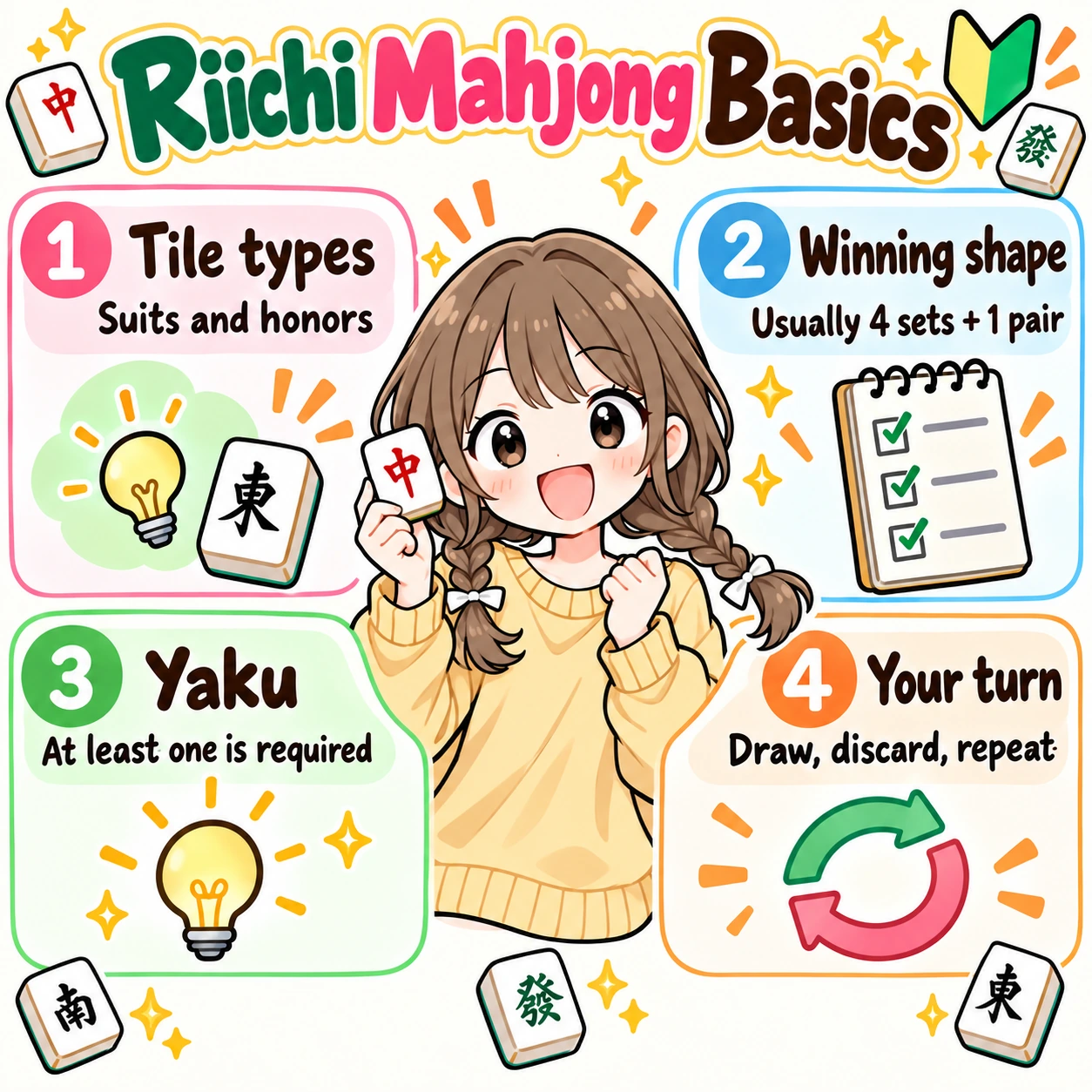
You do not need to memorize every yaku. Begin with drawing and discarding, then learn a winning shape that includes a yaku.
Three things to remember
- Recognize the tilesTell suited tiles and honors apart
- Learn the winning shapeUsually four sets and a pair
- Learn your first yakuStart with riichi, tanyao and yakuhai
 Enlarge the illustration ↗
1. The flow of a hand and how to win
Seven essentials for your first hand
- The tiles are characters (manzu), circles (pinzu), bamboo (souzu) and honors.
- On your turn, draw one tile and discard one tile.
- The standard winning shape is four sets of three tiles and one pair.
- A hand needing just one more tile to complete it is in tenpai.
- You can declare riichi when your closed hand reaches tenpai.
- Win with your own draw by calling tsumo, or with an opponent’s discard by calling ron.
- To win, you normally need at least one yaku.
What can wait until later
You can play a few hands before learning every yaku, fu calculation, scoring tables, the finer points of kan and furiten, detailed draw rules, advanced tile efficiency or push–fold decisions.
What kind of game is mahjong?
Mahjong is usually played by four people. You work toward a winning hand by replacing tiles one at a time. You normally hold 13 tiles. On your turn, draw one from the wall to make 14, then discard an unwanted tile to return to 13.
A hand ends when a player completes a winning shape with a yaku, and points are paid according to the hand’s value. East-only and East–South games contain several hands; the player with the most points at the end finishes highest. The aim is to finish the whole game with more points, rather than simply win one hand.
- Receive your starting hand
- Draw one tile
- Discard one tile
- Improve your hand
- Reach tenpai
- Win by tsumo or ron
- Receive the points
On your turn: draw one, discard one
Each player is dealt 13 tiles, called the starting hand (haipai). The dealer takes the first turn by discarding from 14 tiles. After that, players repeat these four steps.
- Draw one tile from the wall (tsumo)You now have 14 tiles
- Choose one unwanted tile from the 14Keep completed sets and promising combinations
- Discard the unwanted tileThis is called discarding (dahai); your hand returns to 13 tiles
- The next player takes a turnPlay normally proceeds counterclockwise
Tsumo means both drawing a tile and declaring a self-drawn win. You do not say it when making an ordinary draw. Announce “tsumo” only when the tile you draw completes a valid winning hand.
Chi, pon and kan change the turn sequence. To begin, learn the usual pattern of drawing one tile and discarding one.

What if the wall runs out before anyone wins?
If nobody wins before the drawable wall is exhausted, the hand ends in an exhaustive draw (ryuukyoku).
After a draw, points may be exchanged between players in tenpai and those who are not (noten). Rules differ on when the dealer repeats and whether certain situations cause an early, abortive draw. If you are unsure, keep your tiles intact and ask the person running the game.
What is the difference between a hand and a hanchan?
A hand (kyoku) runs from the deal to a win or draw. Hands progress through East 1, East 2 and so on. An East-only game ends after the East round; an East–South game includes both East and South rounds and is commonly called a hanchan.
Winning a hand does not necessarily mean winning the game. You play several hands and compete for the highest final score and placement.
2. Tiles and combinations
34 tile types: first recognize four groups
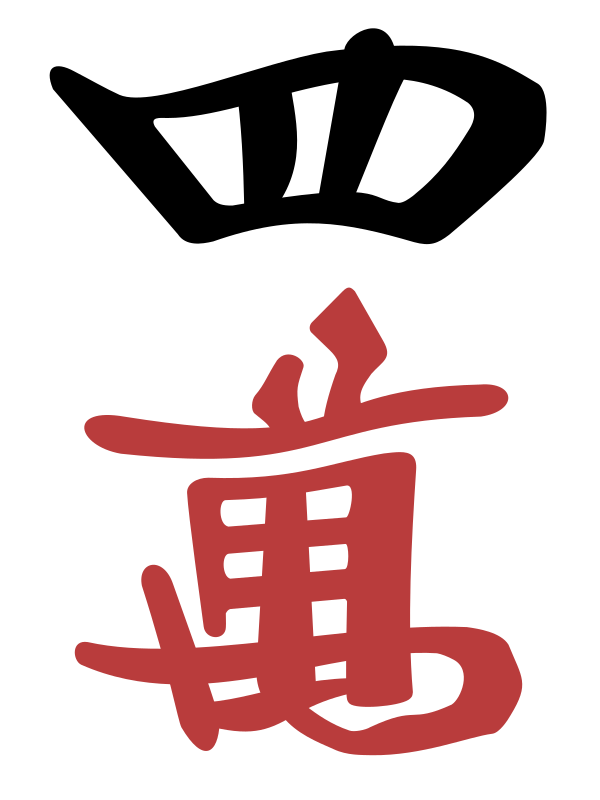
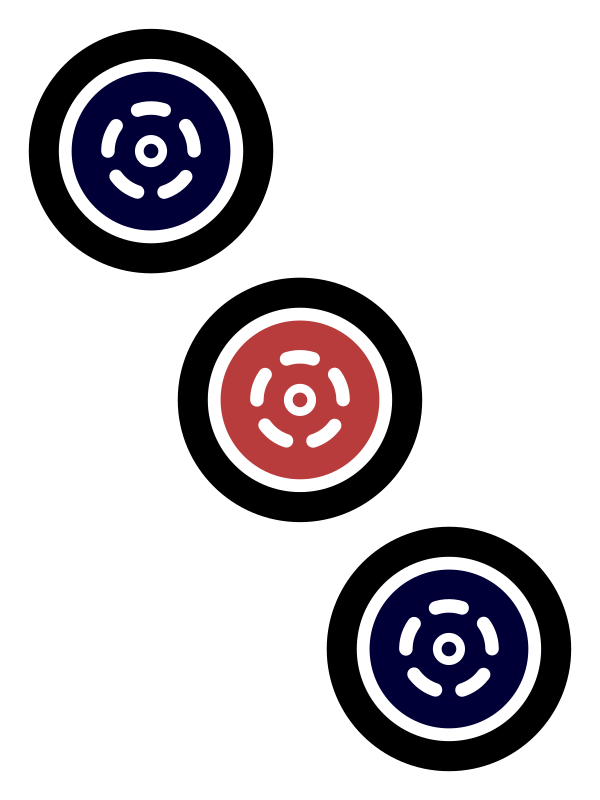
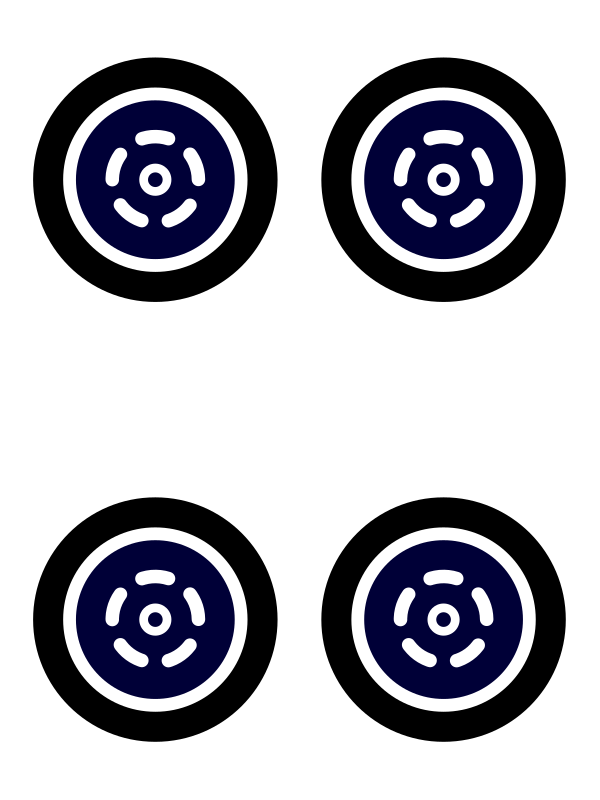
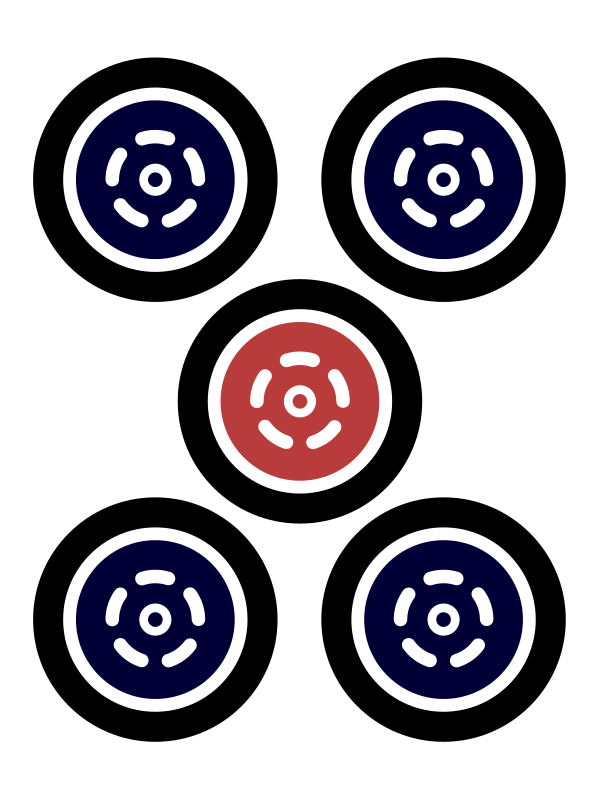
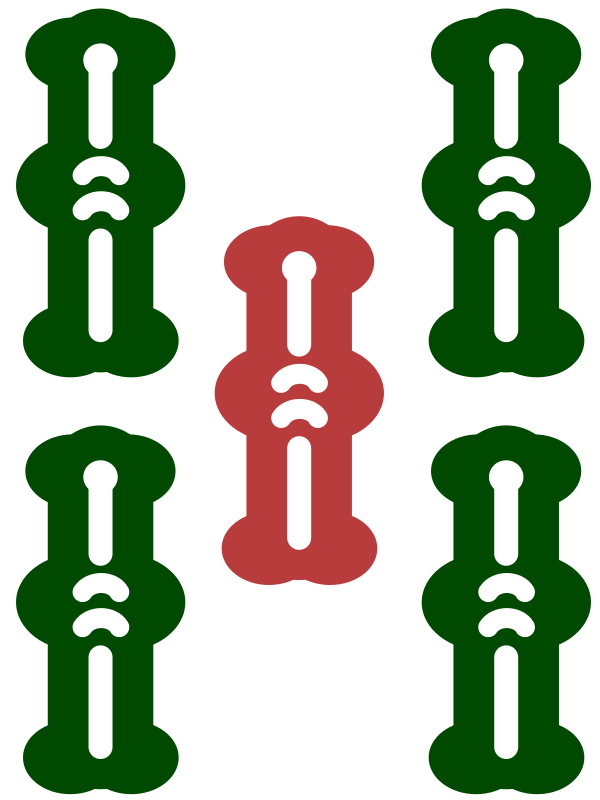
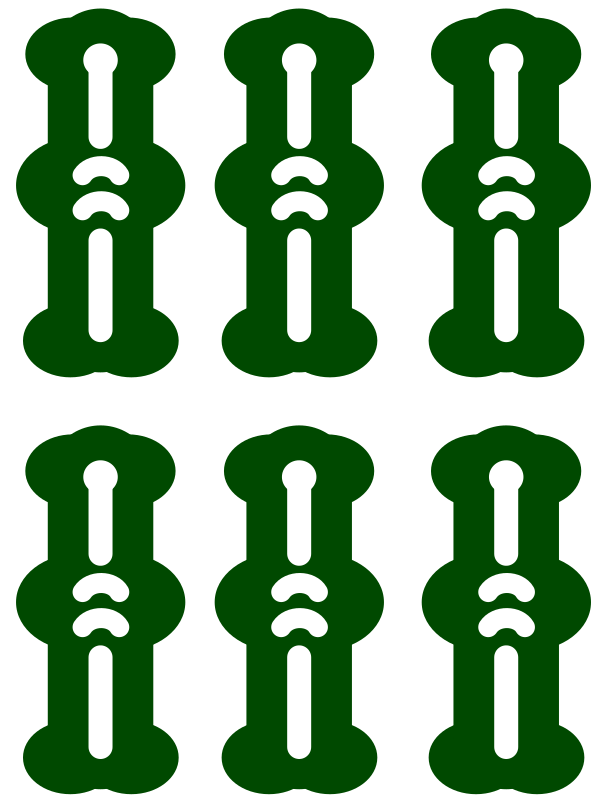
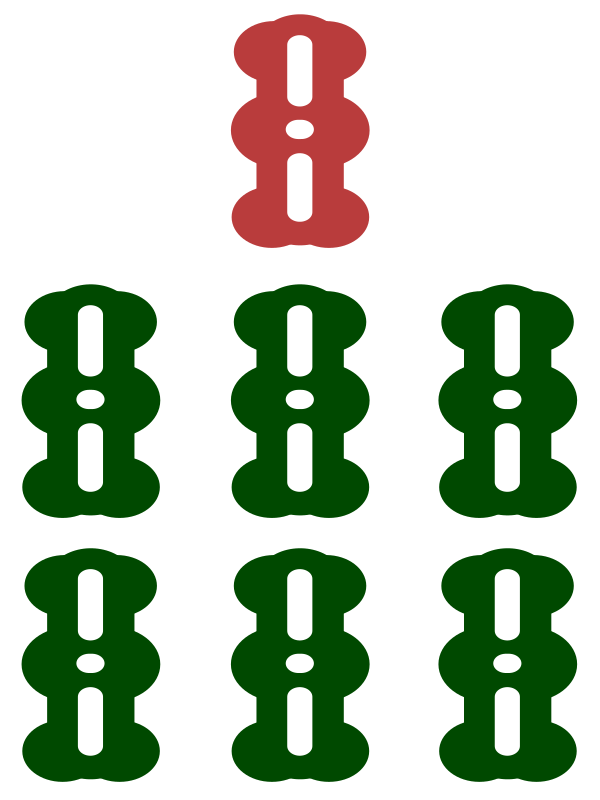
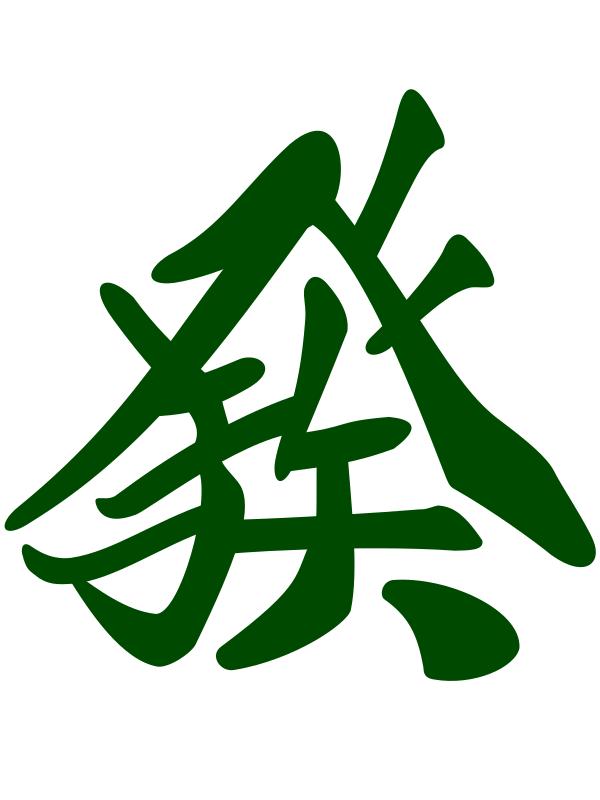
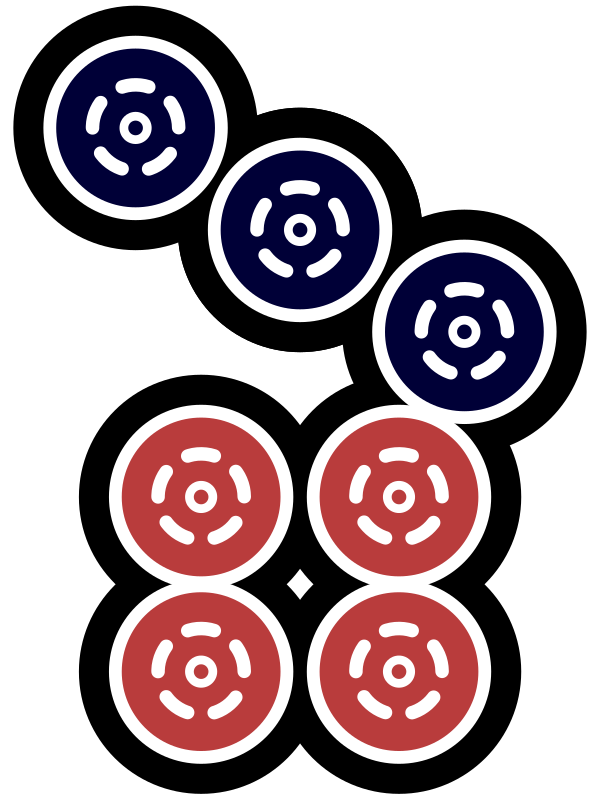
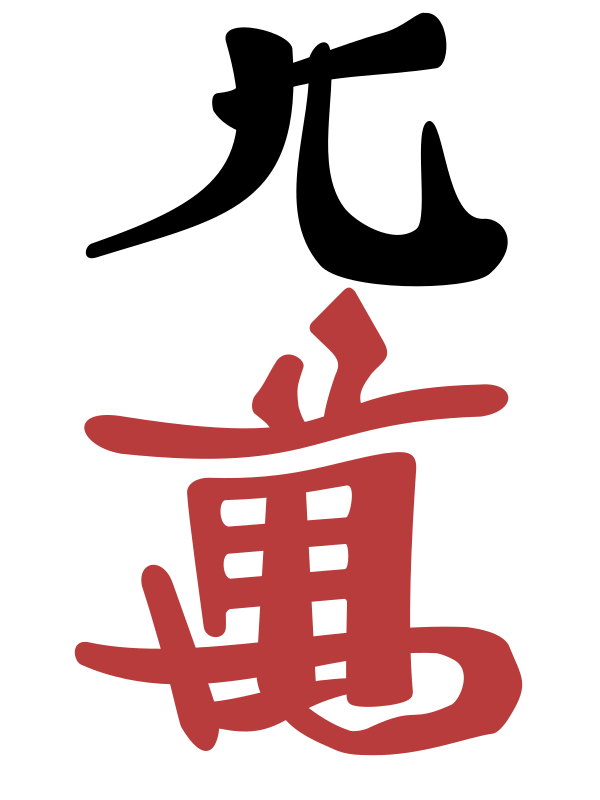
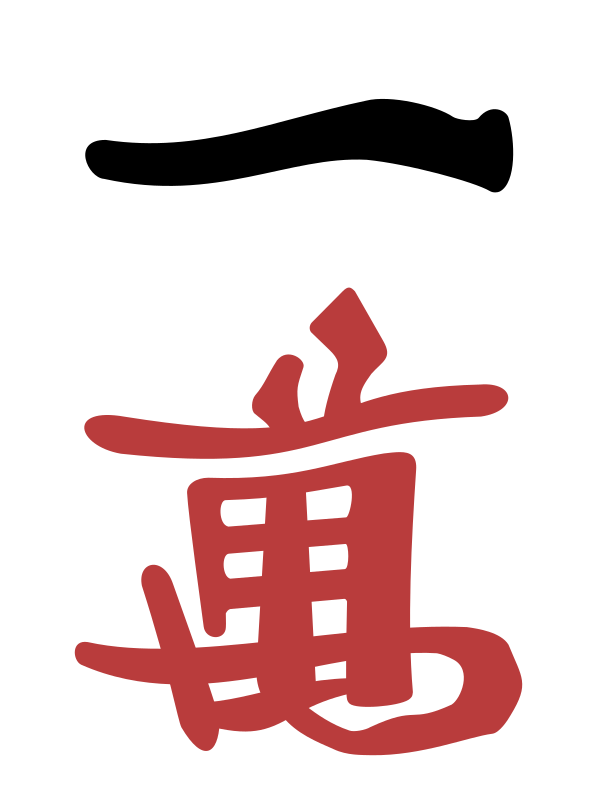
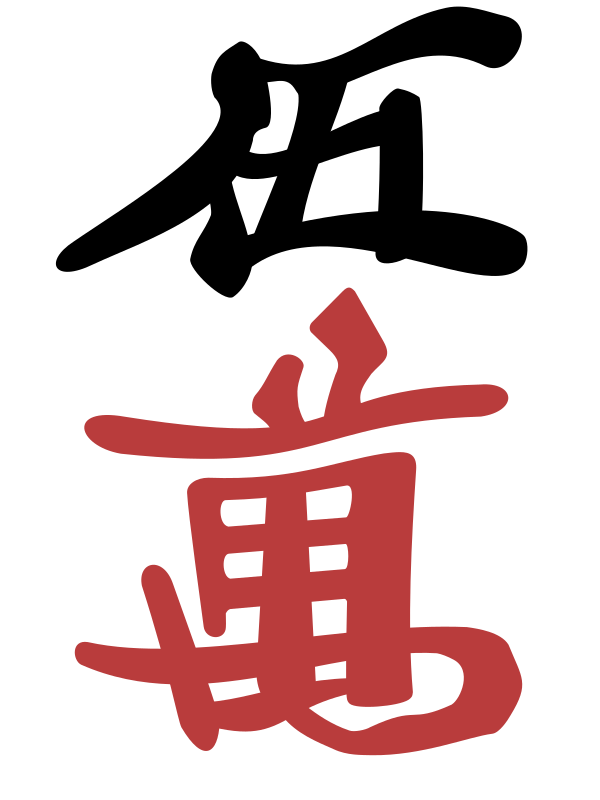
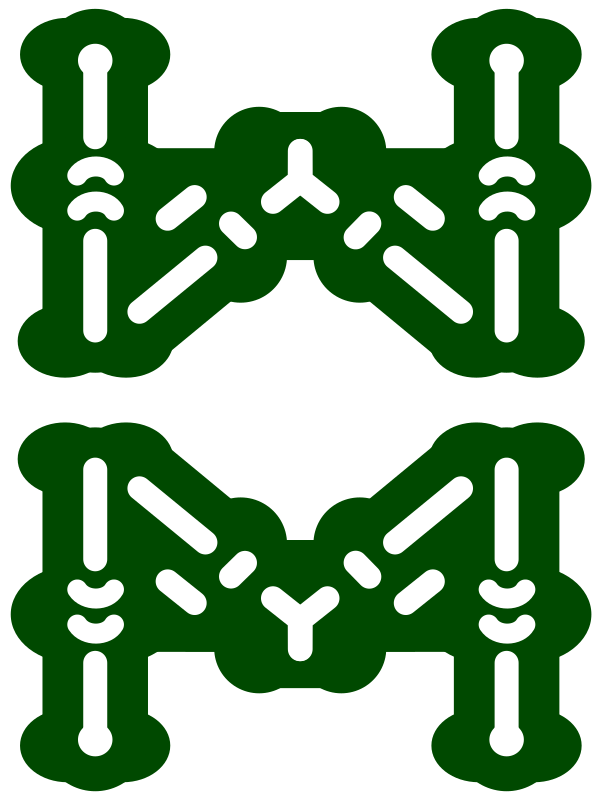
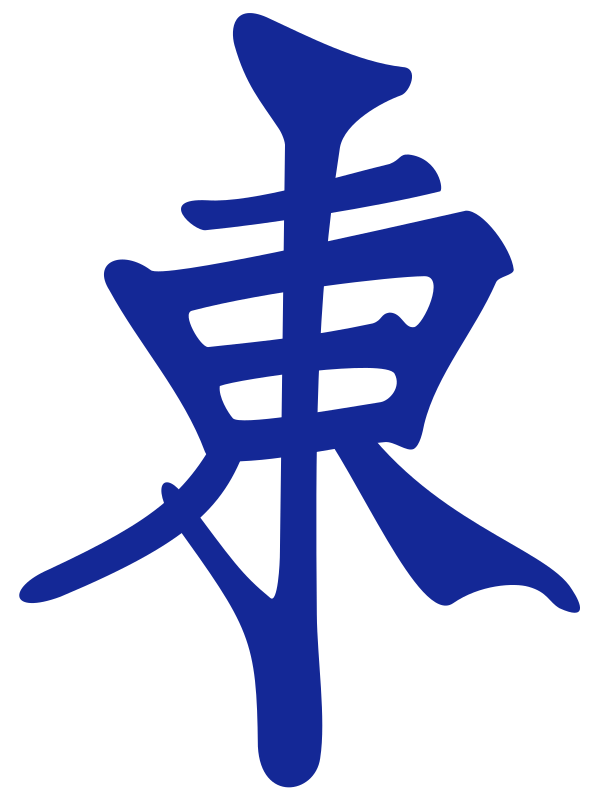
Before learning the names, sort tiles by their appearance: Chinese numerals with 萬, circles, bamboo patterns, and the honors 東, 南, 西, 北, 白, 發 and 中.
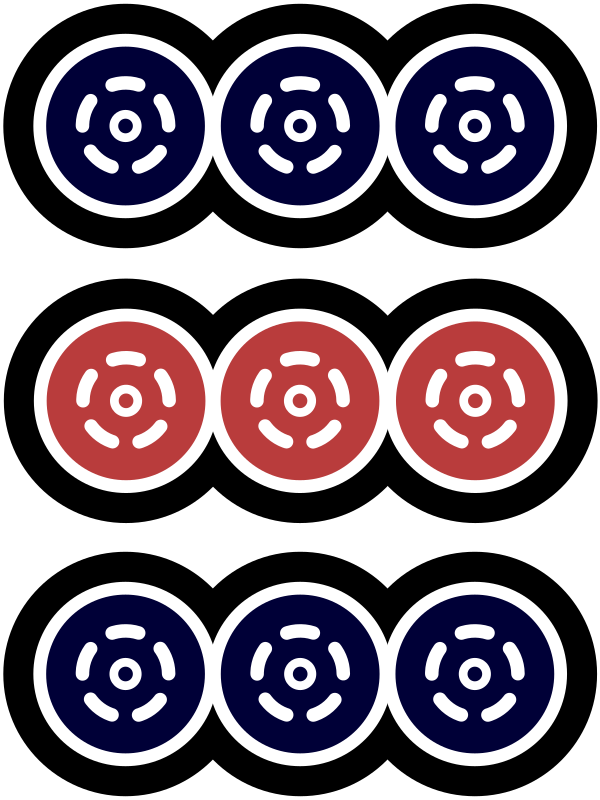
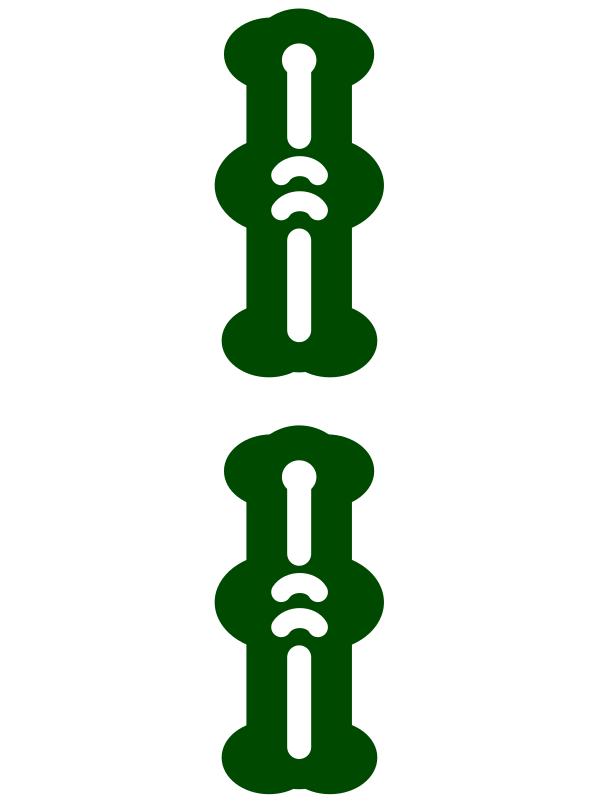
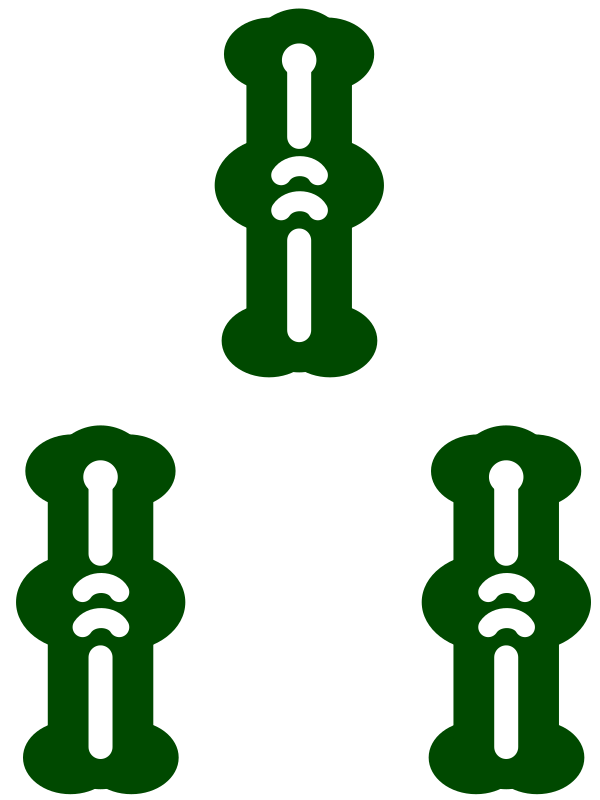
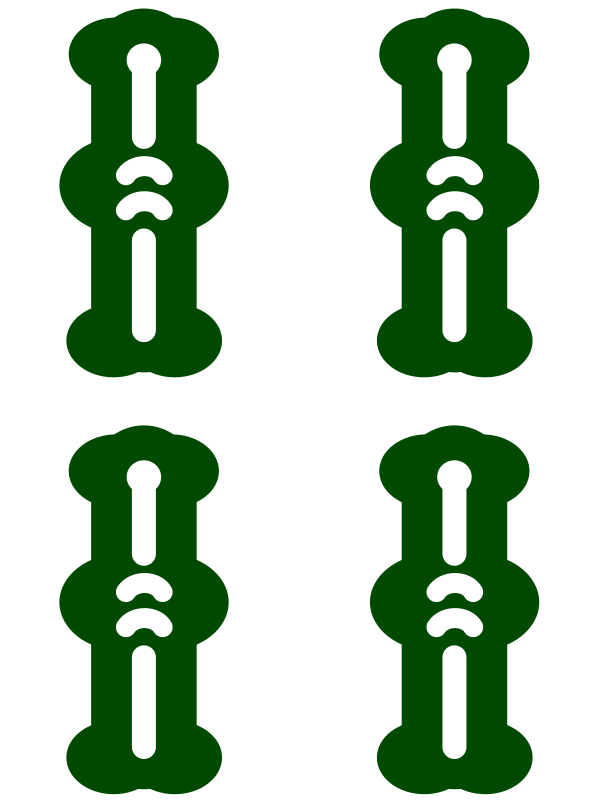
The first three groups are suited tiles (shuupai); the last group consists of honors (jihai). Characters (manzu) use numerals and 萬, circles (pinzu) use round patterns, and bamboo (souzu) use bamboo-like patterns. The 1-bamboo tile is usually illustrated with a bird.
Honors have no numerical sequence, so East, South and West cannot form a sequence.
Mahjong has 34 tile types, with 136 tiles in a standard four-player set. There are 9 ranks in each of 3 suits and 7 honors: 9 × 3 + 7 = 34. Normally there are 4 copies of each, giving 34 × 4 = 136 tiles.
Arrange your hand in these four groups. Sort suited tiles from 1 to 9 and place identical honors together to make sequences and matching groups easier to see.
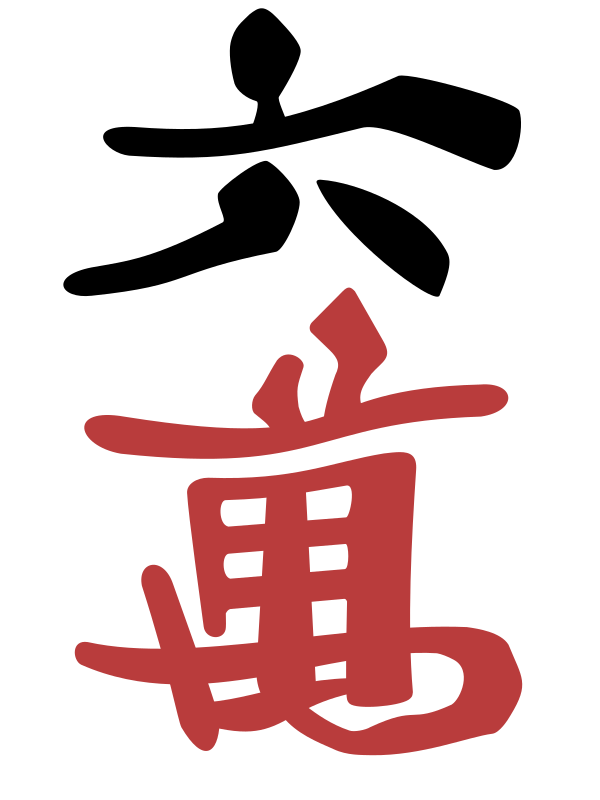
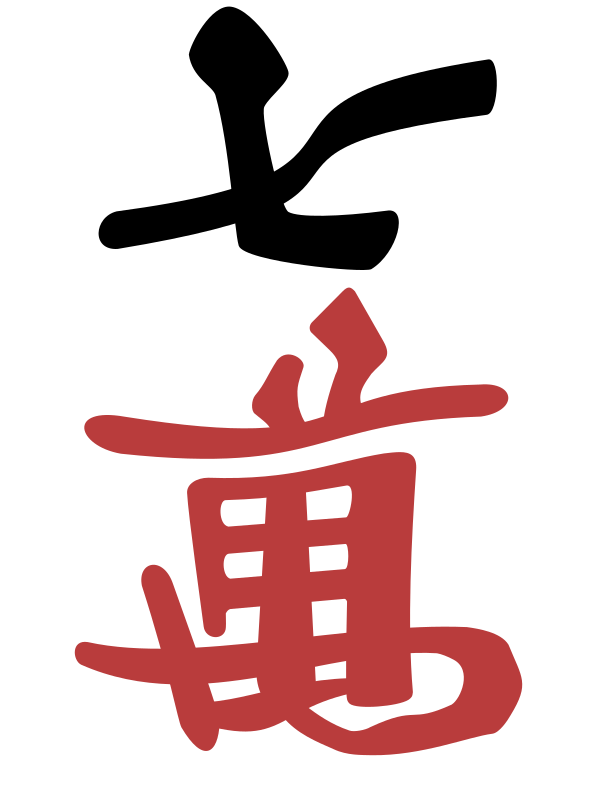
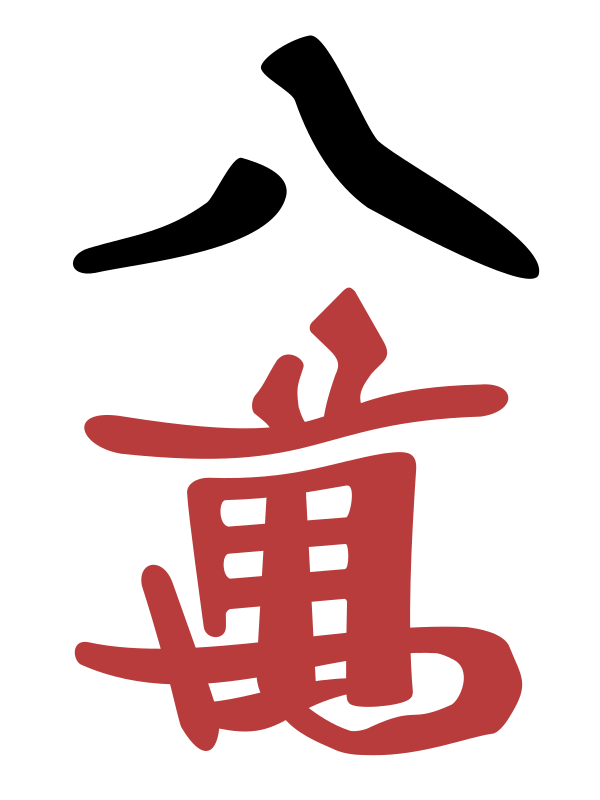


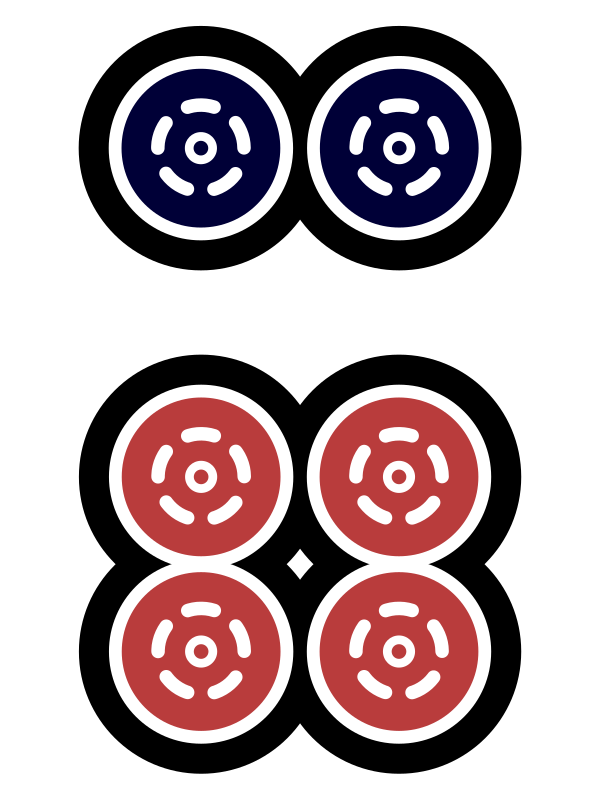

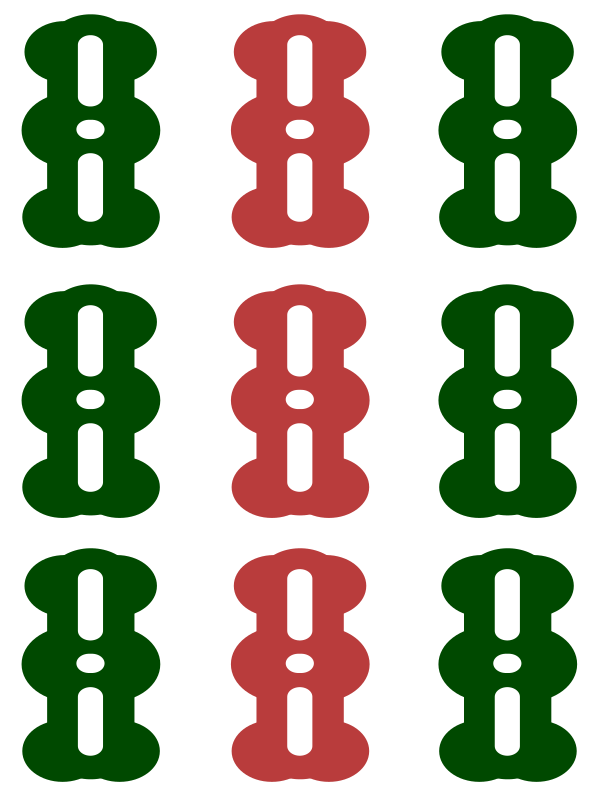





Terminals, honors and simples
When learning yaku, distinguish 1s, 9s and honors from suited tiles numbered 2 through 8. The first group is called terminals and honors (yaochuuhai); the second is simples (chuuchanpai). For your first hand, recognizing these two groups matters more than memorizing the terminology.
Dora increase your score but do not count as a yaku
Dora add to the value of a winning hand. Ordinary dora are determined by a face-up dora indicator, while red fives are red dora. Dora alone do not let you win: you still need a yaku such as riichi. The indicator itself is not the dora, so check the game display or ask at the table.
White, Green (發) and Red (中) are the three Dragon tiles. Red dora and ura-dora increase the score just as ordinary dora do; they are not yaku.
Three-tile sets: sequences and triplets
Three consecutive numbers in one suit form a sequence (shuntsu); three identical tiles form a triplet (koutsu). Four identical tiles, declared using the proper procedure, form a quad (kantsu), which still counts as one set.
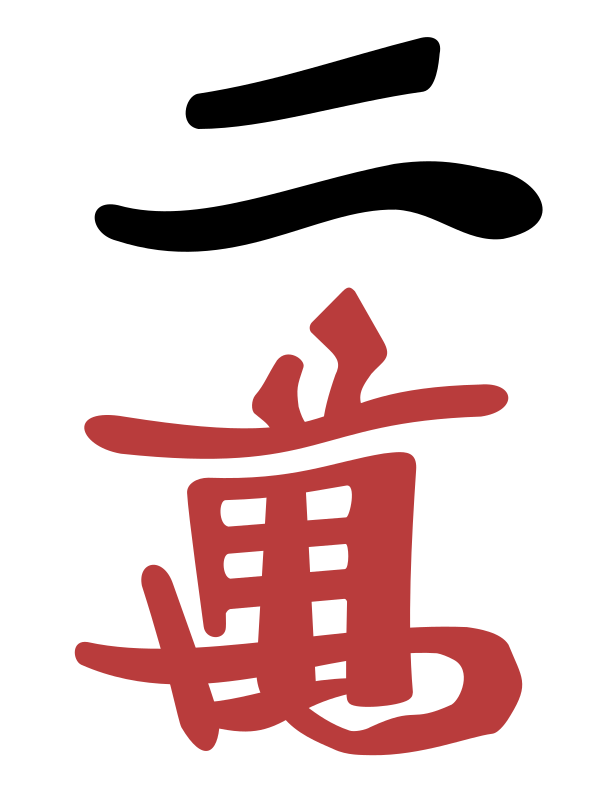
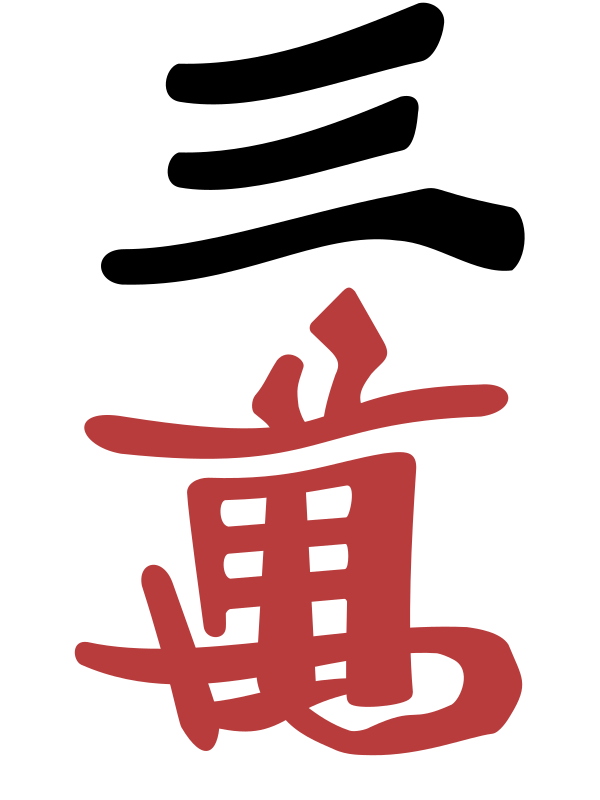
For example, 2-3-4 manzu and 6-7-8 pinzu are sequences. Mixing suits, wrapping 8-9-1 around the end, or arranging East–South–West does not make a sequence. Two identical tiles can serve as the pair or become a triplet if you acquire a third.
Sequence
Triplet
Quad
Pair
Two tiles that need one more to form a sequence
A two-tile combination one tile short of a sequence is called a taatsu. A 4-5 manzu combination accepts 3-man or 6-man; 4-6 needs 5-man; 1-2 needs 3-man. Combinations accepting more tiles are easier to complete, but visible tiles, yaku, dora and safety also affect which to keep.
A pair can become a triplet or remain the head of your hand. Organize your tiles into completed sets, taatsu, pairs and isolated tiles. See An Introduction to Tile Efficiency for a detailed explanation of shanten and ukeire.
The standard winning shape: four sets and a pair
The standard shape is four sets of three tiles and one pair of identical tiles. You normally hold 13 tiles and aim to complete this shape when a draw brings you to 14.
The sets are called melds (mentsu), and the final pair is the head (jantou): four melds and one pair. If you have exposed sets using opponents’ discards, those sets and the tiles still in your hand together make the same overall shape.
Identify the completed sets one at a time. If four sets leave exactly two identical tiles, the standard shape is complete. Any tiles that do not fit a set or the pair mean the hand is still incomplete.
The next diagram shows four separated three-tile sets, followed by a pair of East tiles on the right.
Two exceptions to the standard shape
There are also seven pairs (chiitoitsu) and thirteen orphans (kokushi musou), which uses terminals and honors. You do not need to learn these in your first few hands. Keep them in mind when your hand contains many pairs, or many terminals and honors.
Try MemoJong: Record your first game →
3. Tenpai, riichi and yaku
Tenpai, riichi, tsumo and ron
A hand needing one more tile to complete it is in tenpai. A hand with no exposed chi, pon, open kan or added kan is closed (menzen); a concealed kan does not open it. Riichi, which you can declare from closed tenpai, is itself a yaku.
When you can declare riichi
To declare riichi, you normally turn your discard sideways and place a 1,000-point stick on the table. Afterward, you generally cannot change your hand: if a drawn tile does not complete it, you discard it. Before declaring, check your waits and whether you have discarded any of them yourself.
Rules vary on declaring riichi with fewer than 1,000 points, declaring near the end of the wall, and making a kan after riichi. Until you are familiar with them, follow the rules of your table or app.
Tsumo: winning on your own draw
Declare “tsumo” when a tile drawn from the wall completes your winning hand. A closed hand receives the yaku menzen tsumo (menzen chin tsumo hou). An open hand can also win by tsumo if it has another yaku, such as yakuhai or tanyao.
Ron: winning on an opponent’s discard
Declare “ron” when an opponent’s discard completes your winning hand. For ron, that player pays the full hand value. For tsumo, the other three players normally share the payment according to their seats. Both require at least one yaku as well as a complete shape.
A complete shape is not enough: learn yaku
You can start playing without knowing every yaku. With a closed hand, consider riichi or menzen tsumo. A triplet of White, Green or Red Dragons, the round wind, or your seat wind gives yakuhai. A hand using only suited tiles 2 through 8 can make tanyao; one with many sequences may be suitable for pinfu.
Choose one yaku to aim for and check its conditions in the table below. Learn the finer exceptions after becoming familiar with these five yaku.
| Yaku | How to recognize it | Open hand | Remember |
|---|---|---|---|
| Riichi | Declare from closed tenpai and place a 1,000-point stick | Not allowed | Check that you have not discarded any of your winning tiles |
| Menzen tsumo | Draw your own winning tile with a closed hand | Not allowed | Does not apply to ron |
| Yakuhai | A triplet of White, Green or Red Dragons, the round wind, or your seat wind | Allowed | Other wind triplets do not give a yaku by themselves |
| Tanyao | Use only suited tiles numbered 2 through 8 | Check the house rules | Whether open tanyao is allowed depends on the rules |
| Pinfu | A closed hand, four sequences, a non-value pair and a two-sided wait | Not allowed | All four conditions must be met |
Riichi supplies a yaku, but you generally cannot change your hand afterward. Yakuhai can be made with pon. Tanyao uses no 1s, 9s or honors; check whether your table allows open tanyao (kuitan). Pinfu has several conditions, so learn sequences and two-sided waits before tackling it.
Once these five are familiar, explore the Riichi Mahjong Yaku List. It explains each yaku’s value and whether it works in an open hand.
Two common obstacles: no yaku and furiten
Furiten prevents ron, but you can still win by tsumo
While in furiten, you cannot win on another player’s discard. You can still win by tsumo if you draw the tile you need yourself.
Start with furiten caused by your own discards. If you have discarded any tile that completes your hand, you cannot call ron on any of your waits. For example, if you wait on 3-man and 6-man but have discarded 3-man, you cannot ron on 6-man either. Compare all your waits with your own discard row before declaring ron.
Passing an opponent’s winning discard also temporarily prevents ron until your next draw or call. If you pass after declaring riichi, you cannot ron for the rest of that hand. Learn discard-based furiten first, then these two passing rules. For defensive use of discards, see genbutsu and safe tiles.
Having no yaku is a separate reason you cannot win
Even with a complete shape, you cannot declare ron or tsumo without a yaku. Calling removes the possibility of riichi and menzen tsumo, so before chi or pon, check that a yaku such as yakuhai or tanyao remains available.
Dora increase a hand’s value but are not yaku. However many dora you have, you still need at least one yaku. Being unable to ron because of furiten and being unable to win because you lack a yaku are different problems; check them separately.
4. Dealer, non-dealers and tile calls
Seats, winds and the layout of the table
For now, think of the other players as left, right and opposite. In Japanese terminology, they are kamicha, shimocha and toimen, respectively. You can call chi only on a discard from the player to your left.
Each hand has one dealer (oya), who acts first, and three non-dealers (ko). The dealer’s seat is East, followed counterclockwise by South, West and North. When the dealer changes, the seat winds change too.
The round wind (bakaze) is shared by everyone: East in the East round and South in the South round. Your seat wind (jikaze) depends on your current seat. A triplet of either the round wind or your seat wind gives yakuhai.
A tile in the dead wall is turned face up as the dora indicator. A 3-man indicator makes 4-man dora. The sequence wraps from 9-man to 1-man, North to East, and Red Dragon to White Dragon. Kan reveals another indicator; follow the game display or an experienced player’s guidance.
Calling tiles: chi, pon and kan
Using an opponent’s discard to form a set is called calling. It can speed up your hand because you do not have to draw the tile yourself.
Chi, pon and kan using an opponent’s discard (daiminkan) open your hand, making riichi and menzen tsumo unavailable. Before calling, always check that you will still be able to make a yaku.
Chi takes a discard from your left to complete a sequence. Pon takes any opponent’s discard to complete a triplet. Kan declares four identical tiles as one set and comes in these three forms.
You may pon wind tiles when they form a triplet. However, a wind that is neither your seat wind nor the round wind does not give a yaku on its own. Before calling, identify your yaku: a Dragon, a value wind, or another valid pattern.
- Concealed kan (ankan): declare four identical tiles already in your hand. This alone does not open your hand.
- Open kan from a discard (daiminkan): add an opponent’s discard to three identical tiles in your hand. This exposes the set and opens your hand.
- Added kan (kakan): add a fourth tile you drew to a triplet already exposed by pon. Your hand remains open.
Chi
Pon for yakuhai
How to take an opponent’s discard
For chi, pon or daiminkan, follow these steps.
- Immediately after the tile is discarded, clearly say “chi,” “pon” or “kan” (here, kan means daiminkan).
- Show the tiles from your hand that complete the set and take the discard.
- Place the set to your right, orienting the called tile to show which player supplied it.
- After chi or pon, discard one tile from your hand. After daiminkan, take a replacement draw before discarding; follow the app or the person running the game.
Concealed kan and added kan are declared on your own turn. They do not claim the latest discard, so you do not orient a new tile to identify a discarder.
If several players call on the same discard, wait for the app or the person running the game to resolve it. Clearly announcing your call before touching tiles helps prevent mistakes and disputes.
5. Scoring and rules to check before playing
You do not need to memorize scoring immediately
First count han from yaku and dora, then determine fu from the sets and winning shape. At first, use a scoring table or calculator, or ask an experienced player, rather than trying to calculate all the fu unaided.
Next check whether the winner is the dealer and whether the win is ron or tsumo. Look up the score for the hand’s han and fu. Ron is paid by the discarder; tsumo is paid by the other three players. At the same han and fu, a dealer’s win is worth more than a non-dealer’s.
| Win type | Who pays | What to check first |
|---|---|---|
| Non-dealer ron | The player who discarded the winning tile | Use the non-dealer ron score |
| Dealer ron | The player who discarded the winning tile | Worth more than non-dealer ron at the same han and fu |
| Non-dealer tsumo | One dealer and two non-dealers | The dealer pays more than each non-dealer |
| Dealer tsumo | The three non-dealers | All three pay the same amount |
Even a 2-han hand such as riichi plus one dora has different scores depending on fu, dealer status and ron or tsumo. Learn these four payment cases first. Honba additions and collecting riichi sticks can come afterward.
Check who paid whom
Suppose everyone starts with 25,000 points and non-dealer A wins 1,000 points by ron from B. A now has 26,000, B has 24,000 and the other two still have 25,000 each. The total remains 100,000 points.
For tsumo, write down each of the three payments before adding them. Record extras such as riichi sticks separately from the basic hand value to help catch double counting.
For your first games, enter han, fu, dealer status and win type into a scoring table or calculator in that order. The mahjong scoring guide explains fu and common scores step by step.
Distinguish hand scores from final game results
Some rules adjust final results by placement after the whole game ends. Your group may also record chips or participation fees separately. Calculate each hand first, then the overall result. See How to Calculate Mahjong Net Results for details.
When an opponent wins by ron on your discard, you have dealt in (houjuu). You pay the points to the winner.
Rules to check before you start
Mahjong has many house rules that vary between tables and venues. You do not need to memorize them all: ask an experienced player in person or open the rules screen online.
In person, ask an experienced player or the person running the game to explain the table’s rules. Online, read the rules screen before starting.
Ask about these six points before the tiles are dealt
Use these six checks to understand the rules at your table.
- Game length
- Check whether you are playing an East-only game (tonpuusen) or an East–South game (tonnansen).
- Starting points and final results
- Confirm the starting score and how final placements are decided.
- Yaku and dora
- Check whether open tanyao is allowed and whether red fives count as dora.
- Dealer repeats and drawn hands
- Check when the dealer repeats (renchan) and how points are paid after a draw.
- When the game ends
- Check what happens when someone runs out of points or the dealer wins the final hand.
- Simultaneous calls
- When ron or other calls overlap on one discard, follow the app or the person running the game.
Record whether each game was three- or four-player and East-only or East–South. Keeping different formats separate lets you compare like with like.
Also agree on the bankruptcy rule (tobi) and whether the final dealer may end the game after winning (agari-yame).
Are three-player rules the same?
The basic winning shapes and many yaku are shared, but the tiles used, treatment of North, permission to call chi and tsumo payments differ. Before playing sanma, read Three-Player Mahjong Rules.
6. Playing your first hand
What to do in your first hand
Your first goal is to follow the procedure, rather than find the perfect discard. On each turn, work through this checklist. At first, simply counting your sets and identifying a target yaku is enough.
- Do I have the right number of tiles? Without kan, you should have 14 just after drawing and 13 after discarding.
- How many sets are complete? Look for sequences and triplets first.
- Which yaku am I aiming for? Consider riichi if you have not called, or yakuhai if you hold two identical Dragons.
- Which draws complete more sets? For each two-tile group, identify the connecting or matching tile that would complete it.
- What should I discard? Consider isolated tiles that do not contribute to a completed set or your target yaku.
- Has an opponent declared riichi? Consider defending with tiles that player has already discarded (genbutsu), rather than always attacking.
- Can I call ron? Check that you have at least one yaku and have not discarded any of your waits, which would make you furiten.
After each hand, note one thing to check next time, such as forgetting your yaku after calling or overlooking a wait. As you gain experience, also compare ukeire, hand value and defensive options.
Common beginner mistakes
| Mistake | Why it happens | What to check next time |
|---|---|---|
| Trying to call ron without a yaku | Checking only whether the shape is complete | Make sure you can name at least one yaku |
| Thinking dora alone allow a win | Mistaking dora for a yaku | Find a yaku before counting dora |
| Calling ron while furiten | Checking only some of your waits | Compare every winning tile with your own discard row |
| Calling and losing the option to declare riichi | Forgetting that riichi requires a closed hand | Check which yaku remain after calling |
| Treating a non-value wind as yakuhai | Thinking every triplet gives yakuhai | You may pon the wind, but need another yaku if it is neither your seat wind nor the round wind |
| Forgetting to discard after chi or pon | Stopping after placing the exposed set | After exposing the set, discard one tile from your hand |
| Putting discards out of order | Filling an empty space in your discard row | Place discards in sequence from left to right |
| Revealing your hand before checking it | Assuming you have won without checking yaku and waits | Make your declaration first, then follow the person running the game |
| Mixing up scoring conditions | Trying to consider dealer status, win type, han and fu all at once | Apply each condition to the scoring table in turn |
| Combining three-player and four-player results | Recording different formats as if the conditions were identical | Keep separate records for each format |
After a mistake, write one specific sentence: “I treated South as yakuhai even though it was neither my seat wind nor the round wind,” or “I missed that I had discarded 6-man.” Record something you can check next time, rather than simply “I played badly.”
Review uncertain defensive decisions using only information available during the hand, such as visible discards. Defense and Push–Fold Decisions explains how discards and visible tile patterns help you assess safety.
Etiquette at the table and online
Announce your call before moving tiles
- Clearly announce tsumo, ron, riichi, chi, pon or kan before moving tiles.
- Keep your drawn tile separate from your other 13 tiles until you have checked it.
- Place discards in order in your own row; do not change your choice after releasing the tile.
- Do not criticize other players’ choices or give them answers while the hand is still in progress.
- If you are unsure of the score, ask for a check and confirm the yaku and dealer status together.
- Follow the venue’s rules on food, drinks, phones and other matters.
Venues and tournaments handle mistaken declarations differently. Say that you are a beginner before starting, and when unsure, ask before moving tiles. Giving everyone time to confirm the situation helps prevent misunderstandings.
Online: check the timer and automatic actions
Online systems handle score transfers and many procedures automatically. Before playing, check the turn timer, automatic tsumo and call-confirmation settings. If you choose three-player mahjong, check how its rules differ from four-player play.
If chat is available, avoid hurtful language and deliberately delaying the game.
Whether playing in person or online, review the information you could see at the time and the tiles you chose.
A seven-day practice plan for beginners
Identify characters, circles, bamboo and honors; learn ranks 1 through 9 and the seven honors.
Lay out four three-tile sets and a pair to become familiar with a complete hand.
Start with 13 tiles, draw one and practice discarding a tile that does not contribute to your sets.
Explain when riichi, menzen tsumo and yakuhai apply.
Focus on drawing and discarding in order and finishing a hand, rather than on winning.
Check winning hands against the scoring table. When you could not ron, examine your discard row.
Review your notes and choose one habit to work on, such as checking your yaku before calling.
The goal for these seven days is understanding what to do on your turn, rather than winning. Once you can ask specific questions about confusing situations, move on to yaku, scoring, tile efficiency and defense.
Sources and scope
- About M.League (M.League Organization): its four-player format, tiles, game flow, scoring and placement points.
- WRC Rules (World Riichi Championship): tournament riichi rules and current materials.
- Downloads / Materials for Players (World Riichi Championship): yaku lists, scoring tables and player resources.
- Rules (Saikouisen Nihon Pro Mahjong Association): published rules, including differences between its standard and Classic formats.
Each source describes the rules of its own organization or tournament. Sources checked on July 25, 2026.
What to read next
 Riichi Mahjong Yaku ListHan values, open-hand conditions and differences between similar yaku
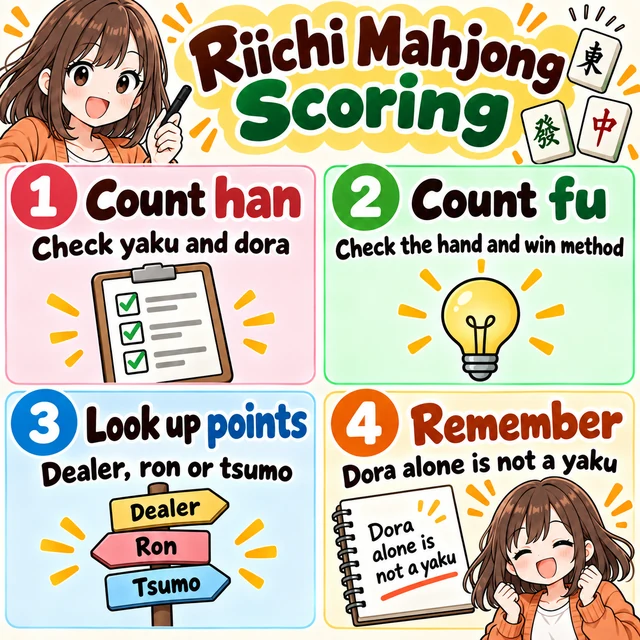 How to Calculate Mahjong ScoresWork through han, fu, dealer status and ron or tsumo in order
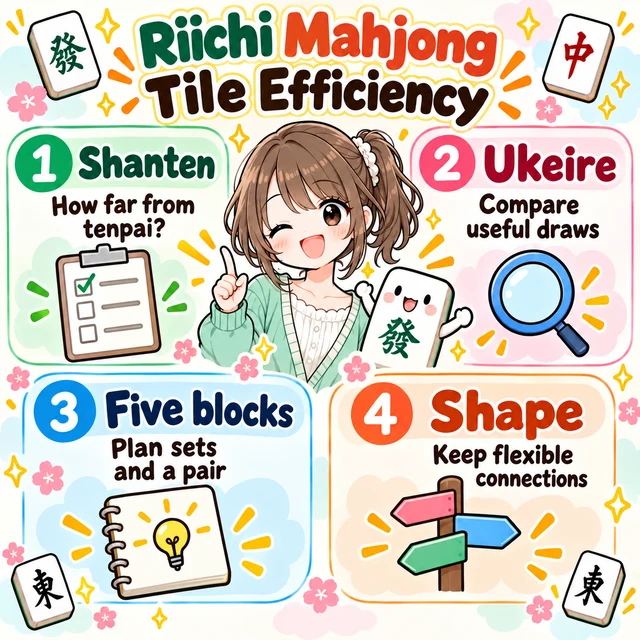 An Introduction to Tile EfficiencyLearn shanten, ukeire and five-block planning with example hands
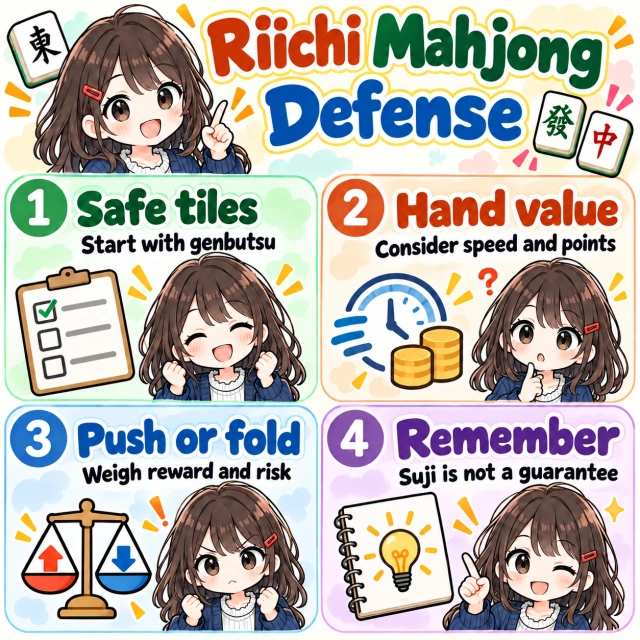 Defense and Push–Fold DecisionsChoose safer discards using genbutsu, suji and kabe
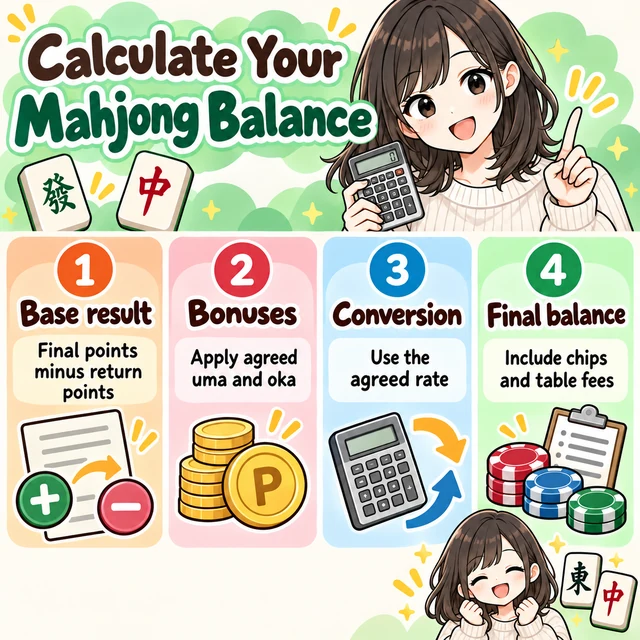 How to Calculate Mahjong Net ResultsCheck uma, oka and conversion rates in point units (P)
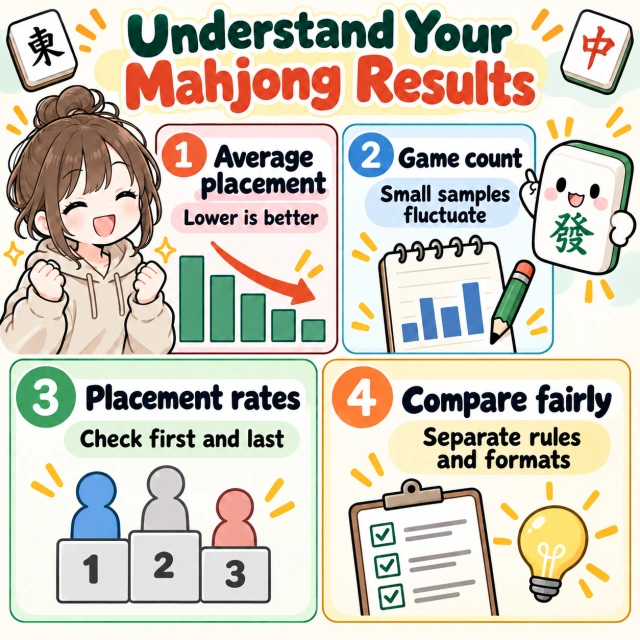 Average Placement and Performance MetricsRead first-place and last-place rates alongside sample size
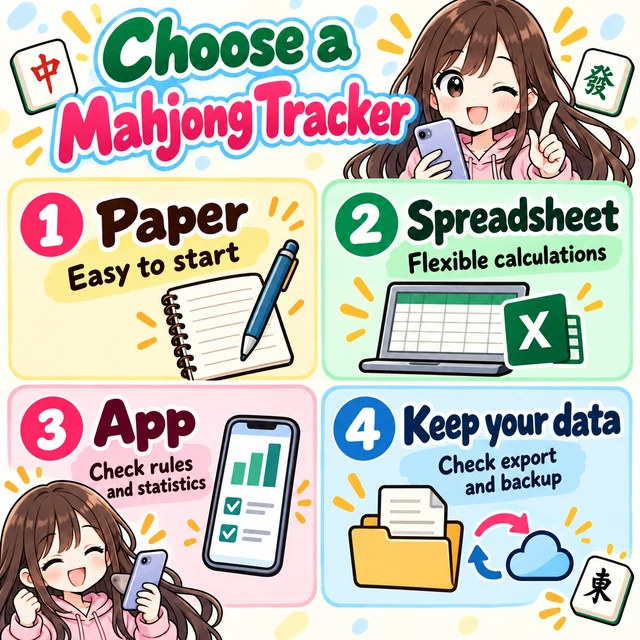 Comparing Mahjong Recording MethodsChoosing between paper, spreadsheets and dedicated apps
 Tracking Three-Player Mahjong ResultsCheck sanma-specific rules and recording fields