


Start here
Calculate your score,
one step at a time.
Identify the yaku, then count han and fu. Finally, use the winner's dealer status and method of winning to find the payments.
Three things to remember
- Check yaku and hanDora alone cannot make a winning hand
- Count fuCheck sets, pair, wait and win method
- Look up the scoreDistinguish dealer, non-dealer, ron and tsumo
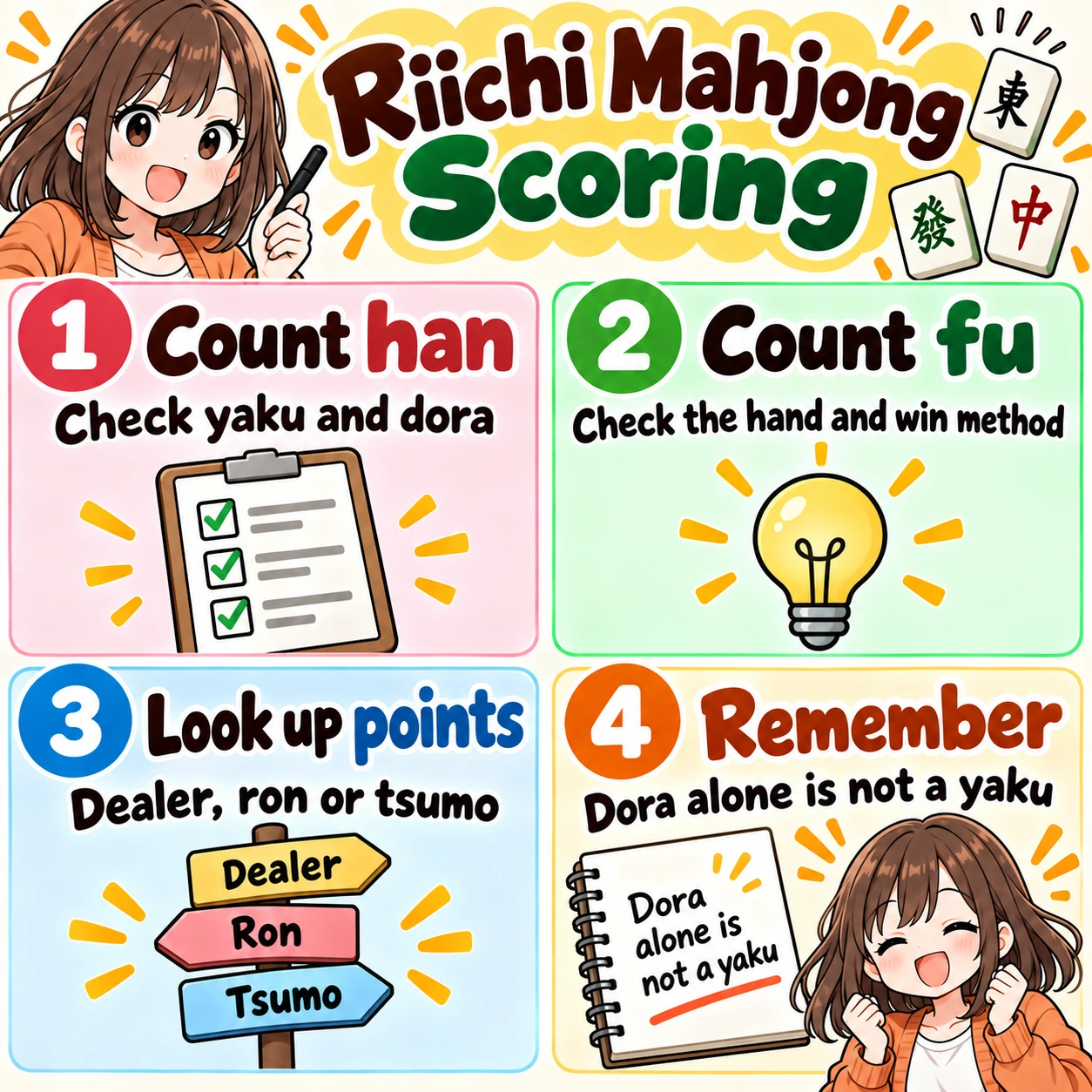 Enlarge the illustration ↗
1. Scoring steps and a worked example
- Check for a yaku: Before counting dora, confirm that the hand has at least one yaku, such as riichi or yakuhai. Dora alone does not qualify a hand to win.
- Add up the han from yaku: Add each yaku's han value, then add dora. Each additional han doubles the basic points before limits apply, so count han rather than the number of yaku.
- Count fu: Add fu for the method of winning, sets, pair and wait.
- Check dealer status: At the same han and fu, a dealer hand is worth more than a non-dealer hand.
- Check ron or tsumo: Apply the payment multipliers and round each player's payment up to the next 100 points.
Think of mahjong scoring in five steps
To use a score table, check five things: yaku, han, fu, dealer status and method of winning. Completing a winning hand is called agari or hōra. For a quick lookup, use the four-player and three-player score tables. To review tile types and winning shapes first, read the beginner's guide to mahjong.
The following payments apply to four-player riichi mahjong. A dealer win is worth more than a non-dealer win. On ron, the player who discarded the winning tile pays the whole amount. On tsumo, all three opponents pay: the dealer pays more when a non-dealer wins, while all three non-dealers pay equally when the dealer wins.
Basic points = fu × 2(han + 2)
Non-dealer ron: basic points × 4 / Dealer ron: basic points × 6
For an easy-to-check record, put the conditions and calculation on one line: “Non-dealer ron, 3 han 40 fu, basic points 1,280; 1,280 × 4 = 5,120, rounded up to 5,200.”
How much is 30 fu, 3 han?
Consider a four-player game with no honba or riichi deposits. A non-dealer declares riichi with a closed hand, then wins by ron with tanyao and pinfu as well. There is no dora. Riichi, tanyao and pinfu are each worth 1 han, for a total of 3 han.
Swipe horizontally to see the full hand




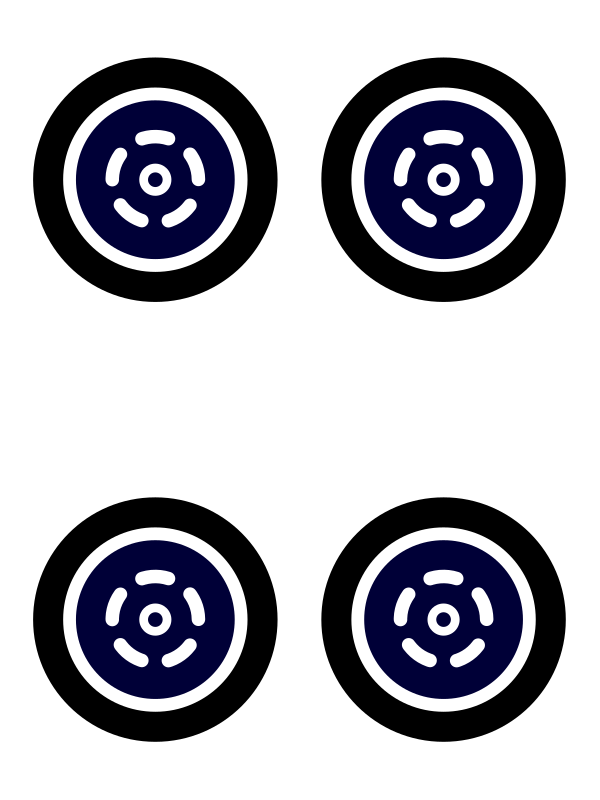
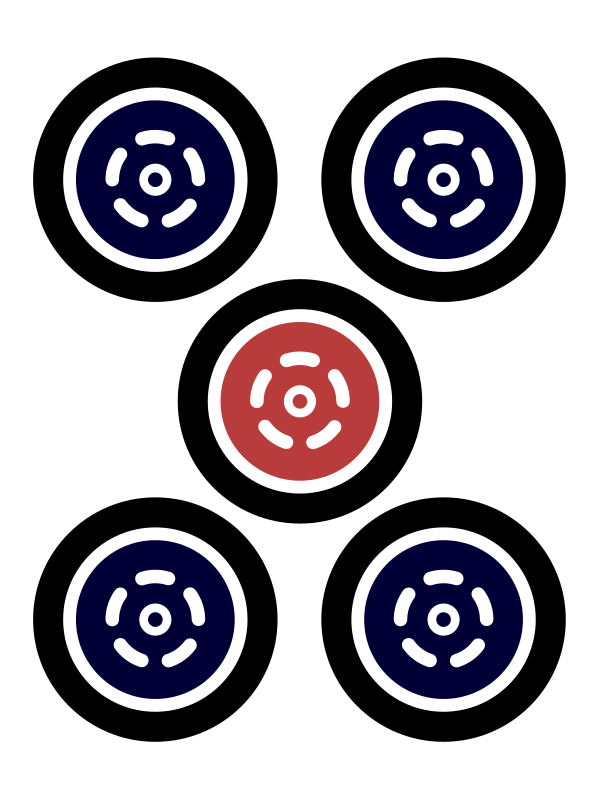
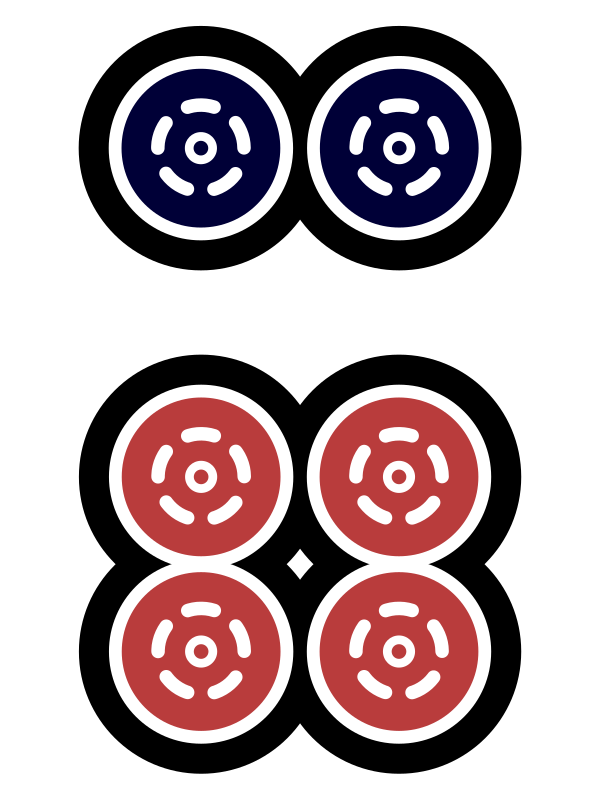
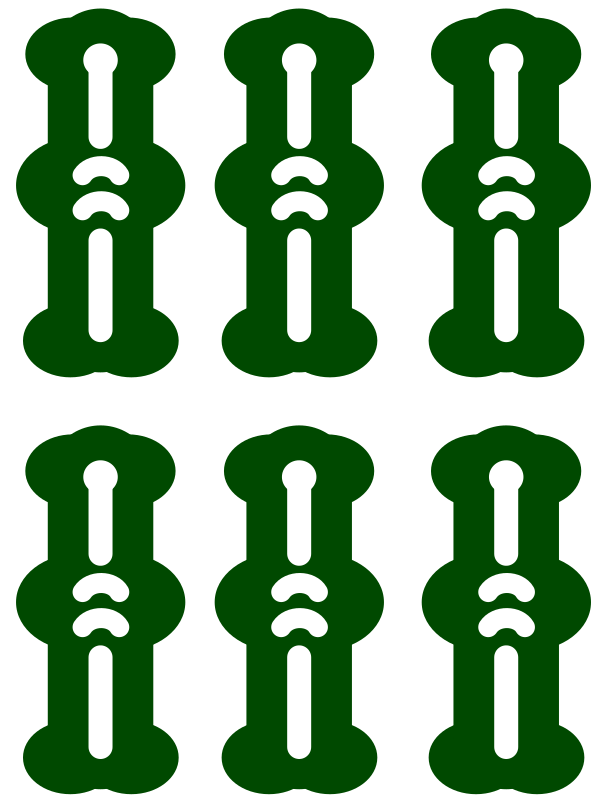
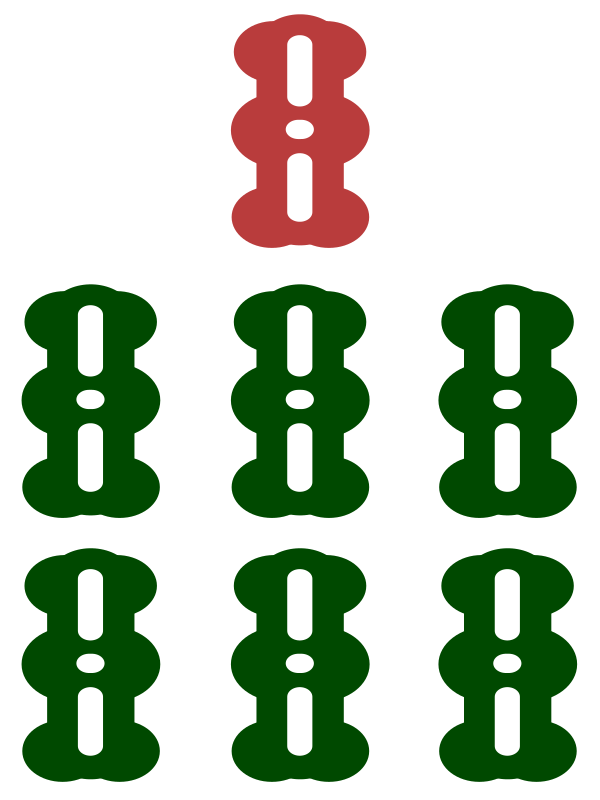

All sets are sequences, the pair is not a value pair, and the wait is two-sided. The hand therefore has 20 base fu plus 10 fu for closed ron, totaling 30 fu. Basic points are “30 × 23 + 2 = 30 × 32 = 960.” Non-dealer ron is 960 × 4 = 3,840, rounded up to the next 100 points: 3,900.
Even at 30 fu and 3 han, payments change with dealer status and win method, as shown below.
| Conditions | Calculation | Payment |
|---|---|---|
| Non-dealer ron | 960×4=3,840 | 3,900 points |
| Non-dealer tsumo | Round non-dealer 960 and dealer 1,920 separately | 1,000 / 2,000 points |
| Dealer ron | 960×6=5,760 | 5,800 points |
| Dealer tsumo | Each pays 960 × 2 = 1,920 before rounding | 2,000 points each |
For non-dealer ron, round 960 × 4 = 3,840 up to 3,900. For non-dealer tsumo, round each non-dealer's 960 up to 1,000 and the dealer's 1,920 up to 2,000; the total received is 4,000. For dealer ron, round 960 × 6 = 5,760 up to 5,800. For dealer tsumo, round each player's 1,920 up to 2,000.
When looking up “30 fu, 3 han,” also check dealer status and ron or tsumo. Since tsumo payments are rounded separately for each payer, the total received may differ from basic points multiplied by the combined multiplier.
2. Count han from yaku and dora
The difference between yaku and han
Divide the completed hand into sets and identify at least one yaku. Dora increases han, but dora alone does not allow a win. Count riichi, tanyao, yakuhai and other yaku first, then add dora, red dora and ura-dora according to the rules. Ura-dora is normally checked only after a win following riichi.
A hand developed without calling another player's discards is closed (menzen); a hand with calls such as chii or pon is open (fūro). Riichi requires a closed hand, while yakuhai can be open. Some yaku, including sanshoku dōjun and honitsu, lose han when open. See the riichi mahjong yaku list for han values and calling restrictions.
| Yaku | Han value |
|---|---|
| Riichi, tanyao, yakuhai, pinfu | 1 han each |
| Chiitoitsu (seven pairs) | 2 han |
| Honitsu (half flush) | 3 han closed / 2 han open |
| Chinitsu (full flush) | 6 han closed / 5 han open |
The number of yaku is not necessarily the number of han. Seven pairs is one yaku worth 2 han, and a closed full flush is worth 6 han. Dora, red dora, ura-dora and kan-dora add han but are not yaku.
An order for checking yaku
Arrange the hand and called sets into four sets and a pair, and identify which set the winning tile completes. Then check closed or open status, round and seat winds, and situational yaku such as riichi, ippatsu or haitei. Finally, use the dora indicators to identify the dora, then count the dora and red dora in your hand and called sets. This helps avoid treating dora as a yaku or counting a yaku invalidated by a call.
How to count han
List all the hand's yaku and add their han values. As a rule, add dora last. For example, riichi 1 han, tanyao 1 han and pinfu 1 han total 3 han.
Riichi 1 han + Tanyao 1 han + Pinfu 1 han = 3 han
Two dora in this hand would bring the total to 5 han. Under common rules, 5 han is mangan, so fu is no longer needed to determine the payment. However, a hand with two dora and no yaku still cannot win.
Try it in MemoJong: Enter your hand and check the score →
3. Count fu
What is fu? A beginner-friendly explanation
Normally, start with 20 fu and add fu for the win method, triplets or quads, a value pair, and the wait. Round the total up to the next 10 fu at the end. Sequences add no fu. Quads are worth more than triplets, terminals and honors more than simples, and concealed triplets more than open triplets.
20 fu + win method + sets + pair + wait = total fu
For example, totals of 32, 34 and 38 fu all round up to 40 fu. Except for specific exceptions, never round the ones digit down.
Fu reference table
| Fu component | Simples (2–8) | Terminals and honors | Notes |
|---|---|---|---|
| Base fu | 20 fu | Starting point for a standard hand | |
| Open triplet (minkō) | 2 fu | 4 fu | A triplet completed by ron is treated as open for fu |
| Concealed triplet (ankō) | 4 fu | 8 fu | A triplet assembled without calling |
| Open quad (minkan) | 8 fu | 16 fu | Called quad or added quad |
| Concealed quad (ankan) | 16 fu | 32 fu | Declared using four tiles from your hand |
| Pair | 2 fu for a value pair | Dragons, round wind or seat wind | |
| Wait | 2 fu | Single-tile, closed and edge waits; two-sided and double-pair waits add 0 fu | |
| Win method | Closed ron: 10 fu / Tsumo: 2 fu | See exceptions after the worked example | |
Simples are numbered tiles from 2 to 8; terminals and honors are 1s, 9s and honor tiles. Sequences normally add no fu. Instead of memorizing the whole table at once, remember the relationships: quads exceed triplets, terminals and honors exceed simples, and concealed triplets exceed open triplets.
Fu for the method of winning
Winning a closed hand by ron adds 10 fu; tsumo normally adds 2 fu. A ron after calling pon or chii does not receive the 10 fu for closed ron. Pinfu tsumo is an exception: it is fixed at 20 fu, with no 2-fu tsumo addition.
Fu for triplets
A triplet is a set of three identical tiles. A called triplet, or one completed by ron, counts as an open triplet and earns less fu than a concealed triplet assembled in your hand.
| Type | 2〜8 | Terminals and honors |
|---|---|---|
| Open triplet (minkō) | 2 fu | 4 fu |
| Concealed triplet (ankō) | 4 fu | 8 fu |
Fu for quads
A quad of four identical tiles earns more fu than a triplet. Open quads earn 8 fu for simples and 16 fu for terminals or honors; concealed quads earn 16 and 32 fu respectively. A concealed terminal or honor quad is worth a substantial 32 fu, so overlooking it can easily change the score.
Fu for the pair
A pair of white, green or red dragons, your seat wind or the round wind earns 2 fu. A pair of numbered tiles or a wind that is not a value tile in the current hand earns 0 fu. Whether a double-wind pair earns 2 or 4 fu depends on the rules; check your table's convention.
Fu for the wait
Single-tile (tanki), closed (kanchan) and edge (penchan) waits earn 2 fu. Two-sided (ryanmen) and double-pair (shanpon) waits themselves earn no fu. However, when ron completes a triplet from a double-pair wait, count that triplet as open for fu.
| Wait | Fu |
|---|---|
| Single-tile, closed or edge wait | 2 fu |
| Two-sided or double-pair wait | 0 fu |
Fu exceptions to remember
| Pattern | Fu |
|---|---|
| Pinfu tsumo | Fixed at 20 fu |
| Chiitoitsu (seven pairs) | Fixed at 25 fu |
| Pinfu ron | 30 fu |
| Open hand with a pinfu-like shape | 30 fu |
The 25 fu for seven pairs is not rounded up to 30. An open hand with no fu beyond the base 20—a pinfu-like open shape—is generally scored at 30 fu. Setting these exceptions aside makes ordinary fu calculation easier.
4. Convert han and fu to payments
The mahjong scoring formula
Below mangan, calculate basic points from fu and han using this formula.
Basic points = fu × 2(han + 2)
At 30 fu, 3 han, basic points are 30 × 25 = 30 × 32 = 960. Multiply by 4 for non-dealer ron and by 6 for dealer ron. For non-dealer tsumo, the dealer pays basic points × 2 and each other non-dealer pays basic points × 1. For dealer tsumo, each of the three non-dealers pays basic points × 2.
The table below shows four-player riichi payments. For the same basic points, dealer hands score higher than non-dealer hands. On ron, the discarder pays everything; on tsumo, three opponents split the payment. The multipliers express these differences.
| Winner | Ron payment | Tsumo payments |
|---|---|---|
| Non-dealer | Discarder pays basic points × 4 | Dealer pays basic points × 2; each of the other two non-dealers pays basic points × 1 |
| Dealer | Discarder pays basic points × 6 | Each of the three non-dealers pays basic points × 2 |
Round each payment up to the next 100 points. For non-dealer tsumo, calculate and round the dealer's payment and each non-dealer's payment separately. With basic points of 960, the non-dealer payment rounds to 1,000 and the dealer payment to 2,000, announced as “1,000 / 2,000.”
Round the payment after applying the multiplier. If you rounded the basic points of 960 to 1,000 first, non-dealer ron would incorrectly become 4,000. The correct calculation is 960 × 4 = 3,840, rounded up to 3,900.
Start by learning the 30-fu scores
30-fu hands are common in play, so their ron scores are a useful starting point. For non-dealers: 1,000, 2,000, 3,900 and 7,700. For dealers: 1,500, 2,900, 5,800 and 11,600.
| Han value | Non-dealer ron | Dealer ron |
|---|---|---|
| 1 han | 1,000 points | 1,500 points |
| 2 han | 2,000 points | 2,900 points |
| 3 han | 3,900 points | 5,800 points |
| 4 han | 7,700 points | 11,600 points |
40-fu scores
The ron scores for 40 fu are 1,300, 2,600 and 5,200 for a non-dealer, and 2,000, 3,900 and 7,700 for the dealer. At 40 fu, 4 han, basic points reach the limit, so the hand is mangan.
| Han value | Non-dealer ron | Dealer ron |
|---|---|---|
| 1 han | 1,300 points | 2,000 points |
| 2 han | 2,600 points | 3,900 points |
| 3 han | 5,200 points | 7,700 points |
| 4 han | 8,000 points (mangan) | 12,000 points (mangan) |
At mangan and above, fu is usually unnecessary
A 5-han hand is mangan regardless of fu. Hands with 4 han and at least 40 fu, or 3 han and at least 70 fu, also reach the basic-point cap and become mangan. At mangan and above, use the fixed limit-hand scores.
| Limit | Han threshold | Non-dealer ron | Dealer ron |
|---|---|---|---|
| Mangan | 5 han, or the mangan basic-point threshold | 8,000 points | 12,000 points |
| Haneman | 6–7 han | 12,000 points | 18,000 points |
| Baiman | 8–10 han | 16,000 points | 24,000 points |
| Sanbaiman | 11–12 han | 24,000 points | 36,000 points |
| Yakuman | Yakuman yaku | 32,000 points | 48,000 points |
Non-dealer tsumo payments are 2,000 / 4,000 for mangan, 3,000 / 6,000 for haneman, 4,000 / 8,000 for baiman, 6,000 / 12,000 for sanbaiman and 8,000 / 16,000 for yakuman. Dealer tsumo payments are respectively 4,000, 6,000, 8,000, 12,000 and 16,000 from each player.
How much more does the dealer score?
At the same han and fu, dealer scores are approximately 1.5 times non-dealer scores. A 30-fu, 3-han ron is 3,900 for a non-dealer and 5,800 for the dealer; mangan is 8,000 versus 12,000. Dealer wins earn more, and dealing into the dealer also costs more.
Ron and tsumo have different payment arrangements
On ron, the player who discarded the winning tile pays everything. On non-dealer tsumo, the dealer pays twice the non-dealer amount before rounding; on dealer tsumo, all three non-dealers pay the same amount. Check who pays how much, as well as the winner's total.
Be careful when rounding to 100 points
Do not round basic points first. Apply the multiplier, then round each player's payment up to the next 100 points.
960 × 4 = 3,840 → 3,900 points
Incorrect: round 960 to 1,000 first, then × 4 = 4,000 points
For tsumo, calculate the dealer and non-dealer payments separately and round each one up. Remember: round at the end, payer by payer.
5. Examples: pinfu, seven pairs and open hands
Scoring pinfu
Pinfu is a 1-han yaku with special fu rules. These examples are all four-player games, with a non-dealer winner, no honba, no deposits and no dora.
Closed pinfu tsumo is fixed at 20 fu
Swipe horizontally to see the full hand


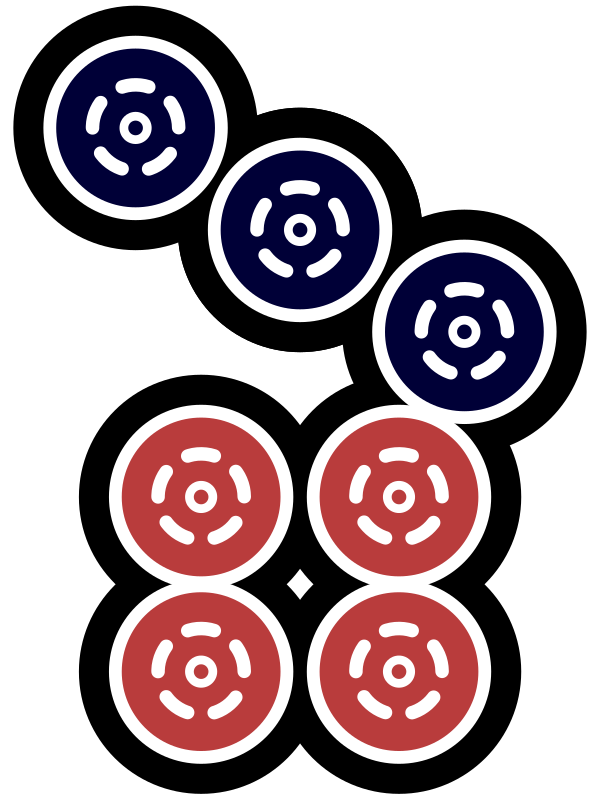
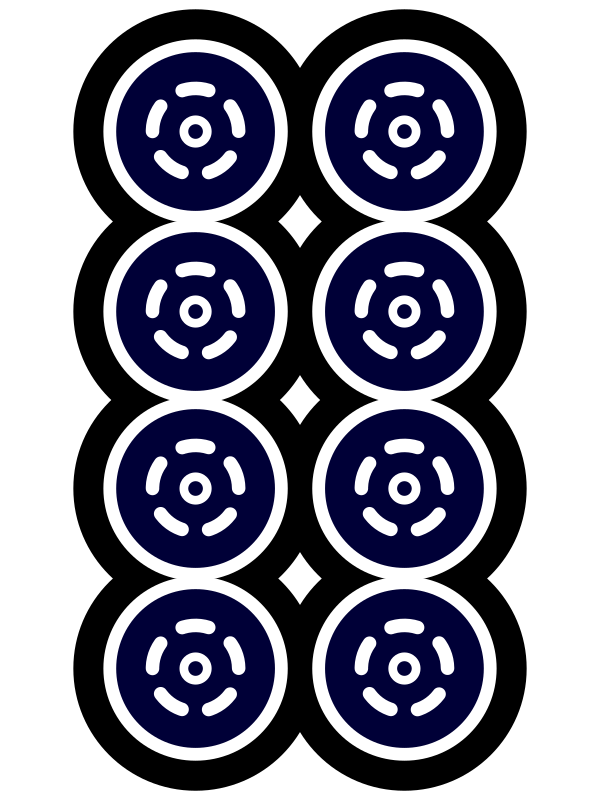
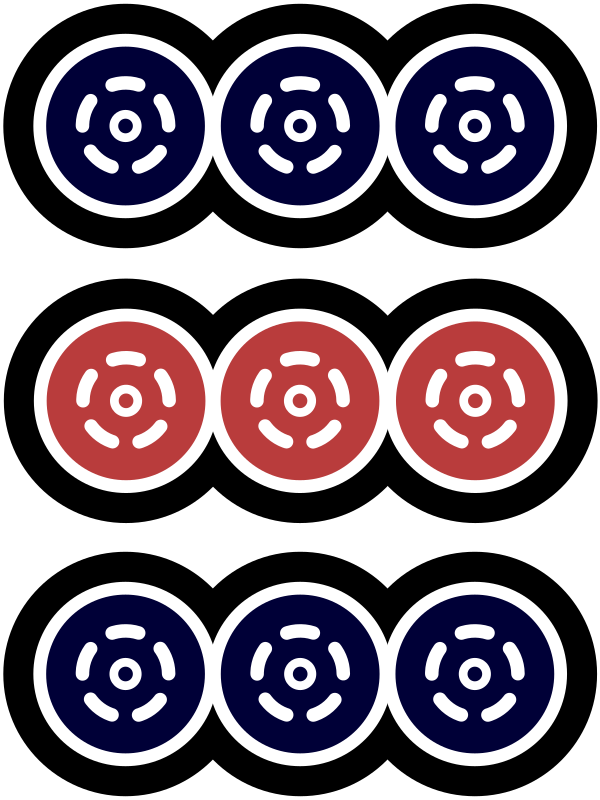
Pinfu 1 han plus menzen tsumo 1 han gives 20 fu, 2 han. Each other non-dealer pays 400 and the dealer pays 700. By contrast, closed pinfu ron adds 10 fu for closed ron and is scored at 30 fu.
Scoring seven pairs
Chiitoitsu is a 2-han yaku made of seven distinct pairs. It is fixed at 25 fu; do not add the usual fu for sets, pair or wait.
Swipe horizontally to see the full hand
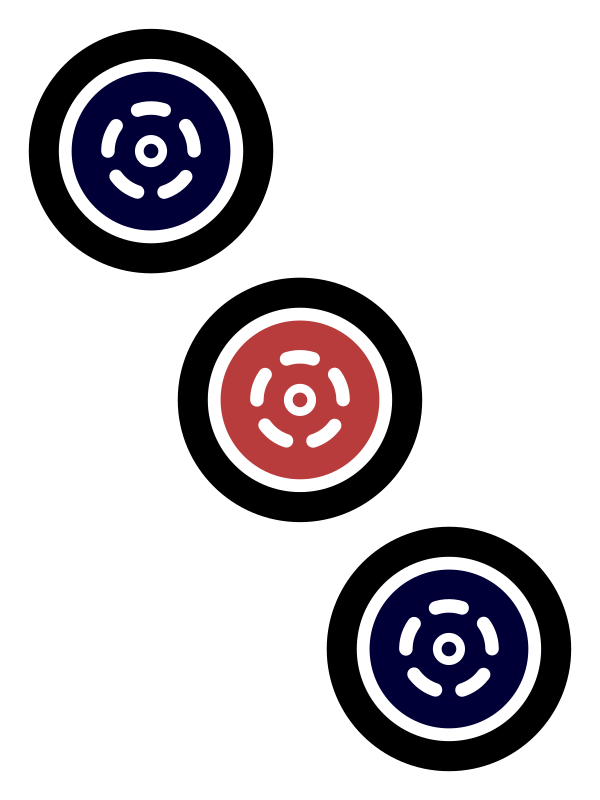

This hand has chiitoitsu for 2 han and 25 fu. Basic points are 25 × 24 = 400; non-dealer ron is 400 × 4 = 1,600. Remember not to round 25 fu up to 30.
Scoring an open hand
To understand how open-hand scoring differs, first look at closed pinfu ron. The 10 fu for closed ron makes even a pinfu hand 30 fu.
Closed pinfu ron is 30 fu
Swipe horizontally to see the full hand
Ron after calling a value triplet adds open-triplet fu
Swipe horizontally to see the full hand
Pon

| Example | Fu and han | Basic points | Points paid |
|---|---|---|---|
| Closed pinfu tsumo | 20 fu, 2 han | 20×24=320 | 400 / 700 points |
| Seven-pairs ron | 25 fu, 2 han | 25×24=400 | 1,600 points |
| Closed pinfu ron | 30 fu, 1 han | 30×23=240 | 1,000 points |
| Ron after calling yakuhai | 30 fu, 1 han | 30×23=240 | 1,000 points |
In the called-yakuhai example, add 4 fu for the open honor triplet to the base 20, then round 24 up to 30. An open hand cannot have riichi, and some yaku, such as honitsu, lose han. It also receives no 10 fu for closed ron, so recount the remaining yaku and set fu.
Exceptions in fu calculation
An open hand with no fu beyond the base 20—a pinfu-like open shape—is treated as 30 fu. Pinfu tsumo normally has 20 fu without the usual 2-fu tsumo addition. Seven pairs is fixed at 25 fu and is not rounded to the next 10. A double-wind pair may be worth 2 or 4 fu depending on the rules; follow the table's convention.
6. Honba, deposits and rule variations
Scoring with honba
Honba is a counter that increases with dealer repeats or drawn hands; it adds neither han nor fu. In common four-player rules, each honba adds 300 points to a ron payment, or 100 points from each opponent on tsumo. Calculate the ordinary hand score first, then add honba.
5,200-point ron at 2 honba: 5,200 + 600 = 5,800 points
The honba payment can vary by ruleset. Record the ordinary score and honba separately instead of changing the score-table values.
How do riichi sticks and deposits work?
A player declaring riichi places a 1,000-point stick on the table as a deposit (kyōtaku). Deposits do not affect han or fu; the winner collects them separately from the hand payment. The discarder does not pay these deposits again on top of the hand score.
Rules differ on how deposits and honba are handled when multiple players win by ron. Follow the table's rules, including whether head-bump priority, double ron or triple ron applies.
Follow the table's rules for honba, deposits and multiple wins
Honba amounts, who collects deposits, double-ron handling and dealer-repeat conditions vary. Check the rule sheet when playing in a different tournament or service.
What is kiriage mangan?
Normally, 30 fu at 4 han and 60 fu at 3 han score 7,700 for non-dealer ron and 11,600 for dealer ron. Kiriage mangan is the rule that rounds these hands up to mangan: 8,000 and 12,000 respectively.
If kiriage mangan is not adopted, use the ordinary scores. Its use differs across competitions and services, including M.League, so check the rules of the game you are playing.
Counted yakuman and double yakuman depend on the rules
A hand totaling 13 or more han may be counted yakuman or capped at sanbaiman, depending on the rules. Rules also differ on double yakuman for patterns such as suuankō tanki or the thirteen-sided kokushi wait, and on stacking multiple yakuman.
Record these as explicit rule options, such as “counted yakuman allowed” or “no double yakuman,” instead of treating them as universal score-table rules.
Is three-player scoring the same as four-player scoring?
Yaku, han and fu often follow the same principles as four-player mahjong, but only two opponents pay on tsumo. Actual payments depend on tsumo-loss rules, North extraction and rounding conventions.
Three-player mahjong has no single universal scoring system. Use the service's or venue's dedicated sanma score table rather than applying four-player tsumo payments unchanged. For settlement after a complete game, see three-player results and balance tracking.
7. A checklist for avoiding scoring errors
Common scoring mistakes
- Treating dora as a yaku and allowing a hand with no yaku to win
- Missing fu for closed ron, tsumo or the wait
- Confusing concealed and open triplet fu, or simples with terminals and honors
- Using the wrong multiplier for dealer, non-dealer, ron or tsumo
- Failing to round each tsumo payment separately to 100 points
- Mixing honba or deposits into the hand-score calculation
Other common errors include adding 2 fu to pinfu tsumo, rounding seven pairs to 30 fu, keeping closed-hand han values after calling, or rounding basic points before applying payment multipliers. Honba and deposits never count as han or fu.
References and scope of the rules
- About M.League (M.League Organization): M.League provisions for fu, han, scores, deposits and honba.
- WRC Rules (World Riichi Championship): the WRC 2025 rules and scoring references.
- Downloads / Materials for Players (World Riichi Championship): official materials including yaku and scoring tables.
- Rules (Saikouisen Nihon Pro Mahjong Association): differences between Saikouisen and Classic rules.
The examples in this article use four-player riichi mahjong under the stated conditions. Each reference describes its own organization's or tournament's rules; the rulesets are not identical. References checked: August 27, 2026.
Related guides
 Four-Player and Sanma Scoring TablesLook up ron and tsumo payments from fu and han
 Mahjong for beginnersReview winning shapes, yaku, tsumo and ron from the beginning
 How to Calculate Mahjong Net ResultsCalculate points and balances after a complete game
 Understanding average placement in mahjongRead your results correctly after playing
 Choosing a Mahjong Results TrackerCompare ways to keep records for different purposes
 Tracking Three-Player Mahjong ResultsUnderstand variations in three-player rules
 Riichi Mahjong Yaku ListCheck han values, calling restrictions and open-hand reductions